Mashed potatoes have followed me quietly through many seasons of my cooking life. Not as a background dish pushed to the side, but as the bowl everyone leans toward first.
I learned early that mashed potatoes are less about force and more about patience. Too much stirring changes everything. Rushing the butter ruins the finish.
Heat, timing, and restraint decide the final texture long before seasoning does.
This recipe grew out of small adjustments made over years—watching how potatoes release steam, noticing how butter melts when added at the right moment, learning how warm milk changes the feel on the spoon.
The goal was never height or drama in the bowl. It was a calm, smooth surface, soft swirls that hold their shape, and a taste that feels settled and complete.
Mashed potatoes like these ask for attention, not speed. Each step builds on the last, from how the potatoes are cut to how they rest after draining.
The result is rich without heaviness, smooth without turning pasty, and gentle enough to sit beside bold mains without being ignored.
This is the method I trust when I want mashed potatoes that speak clearly, without noise, and stay memorable long after the table is cleared.
Table of Contents
Creamy Mashed Potatoes Recipe
Ingredients
- 1 kg starchy potatoes (russet or Yukon gold), peeled
- Cold water, as needed
- 1½ teaspoons salt, divided
- 90 g unsalted butter, cut into cubes, plus extra for topping
- ¾ cup warm whole milk
- 2 tablespoons cream
- ¼ teaspoon white pepper (or finely ground black pepper)
- Finely chopped parsley, for garnish
Instructions
- Cut the peeled potatoes into evenly sized chunks, about 4–5 cm each. This ensures they cook at the same rate and prevents uneven texture.
- Place the potatoes in a large pot and cover completely with cold water. Add 1 teaspoon salt. Starting with cold water allows the potatoes to cook evenly from the inside out.
- Bring the pot to a gentle boil over medium-high heat, then reduce to a steady simmer. Cook uncovered for 15–18 minutes, or until a knife slides in easily without resistance.
- Drain the potatoes thoroughly in a colander. Let them sit for 2–3 minutes so excess steam escapes—this step prevents watery mashed potatoes.
- Return the hot potatoes to the same pot and place over very low heat for 30–60 seconds, gently shaking the pot. This dries out any remaining moisture on the surface.
- Remove from heat and mash immediately using a potato masher or ricer. Do not use a blender or food processor, as this will make the potatoes gluey.
- Add the butter while the potatoes are still hot. Fold gently until fully melted and absorbed, creating a smooth base.
- Slowly pour in the warm milk and cream in stages, stirring gently after each addition. This controls the texture and keeps the mash light and creamy.
- Season with the remaining salt and white pepper. Taste and adjust carefully—well-seasoned mashed potatoes should taste balanced, not flat.
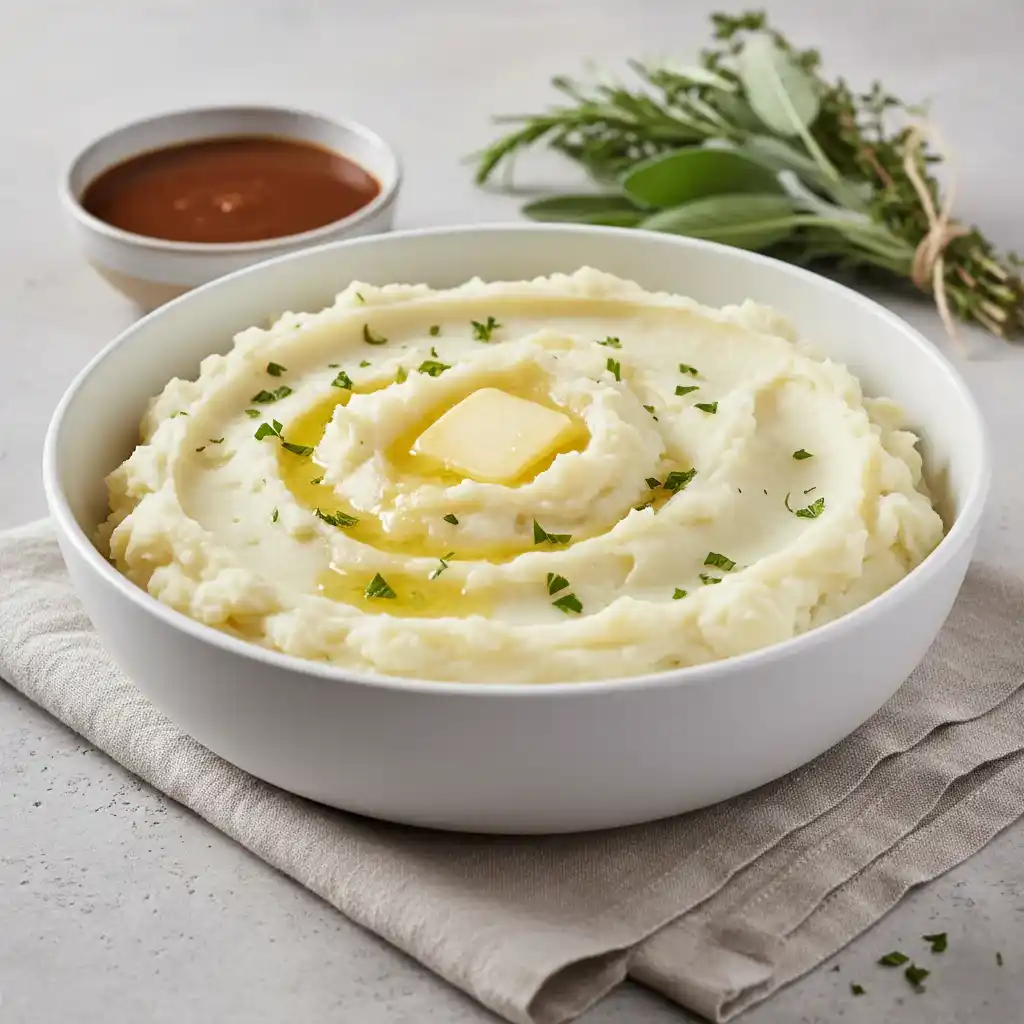
- Spoon the mashed potatoes into a serving bowl and smooth the surface with the back of a spoon in soft, circular motions.
- Add a small cube of butter in the center and allow it to melt naturally. Finish with a light sprinkle of chopped parsley for a clean, classic look.
- Serve warm for the best texture and flavor.
Why Do Mashed Potatoes Turn Gluey And How Do You Prevent It?
Mashed potatoes turn gluey when the starch inside the potatoes is overworked. Once starch is released too aggressively, it mixes with liquid and forms a sticky paste instead of a soft mash.
To prevent this, focus on handling the potatoes gently at every stage.
- Starch Control: Use starchy potatoes but mash them while hot and dry. Avoid food processors, blenders, or hand mixers, as they shred the potatoes too finely and activate excess starch.
- Gentle Mixing: Stir only until the butter and milk are absorbed. Stop as soon as the texture looks smooth.
- Proper Drying: Let the drained potatoes release steam before mashing. Less surface moisture means better texture control.
When you respect the starch, the potatoes stay creamy instead of stretchy.
Which Potatoes Work Best For Creamy Mashed Potatoes?
The type of potato you choose decides the final texture before cooking even begins.
- High-Starch Potatoes: Russet potatoes break down easily and create a fluffy, smooth mash.
- Medium-Starch Potatoes: Yukon gold potatoes give a slightly denser texture with a natural buttery taste.
- Low-Starch Potatoes: Waxy potatoes hold their shape and are not suitable, as they produce a heavy and uneven mash.
For the smooth finish shown in this recipe, starchy or medium-starchy potatoes give the most reliable results.
Why Should Potatoes Start In Cold Water?
This step controls how evenly the potatoes cook from the inside out. Starting in cold water allows the heat to rise slowly, so the center cooks at the same pace as the outside.
If you add potatoes to boiling water, the outer layers soften too fast while the center stays firm. That leads to lumps later, no matter how much you mash.
Cold water cooking builds the base for a smooth texture without forcing it later.
How Much Butter And Milk Is Ideal For Mashed Potatoes?
Balance matters more than quantity. Too little fat tastes dry, while too much makes the potatoes loose and oily.
- Butter First: Butter should always be added before milk. Heat helps it melt evenly and coat the potatoes.
- Warm Milk Only: Cold milk cools the potatoes and stiffens the texture.
- Gradual Addition: Add milk slowly while mixing so you can stop at the exact texture you want.
The goal is a mash that holds soft swirls without spreading.
Why Should You Avoid Over-Salting Early?
Salt behaves differently during cooking than at the end. Salt added to the water seasons the potatoes inside, but too much early on concentrates as the water evaporates.
Final seasoning should always be adjusted after butter and milk are mixed in, when the full flavor is clear. This approach gives control instead of surprise saltiness.
Can Mashed Potatoes Be Made Ahead Of Time?
Yes, but timing and reheating method matter. Freshly mashed potatoes have the softest texture.
If making them ahead, stop slightly short of your final milk amount so reheating does not thin them out.
Cover tightly to protect moisture and texture until reheating.
How Do You Store Mashed Potatoes Properly?
Correct storage keeps mashed potatoes safe and pleasant to eat later.
- Refrigeration: Store in an airtight container in the refrigerator for up to 3 days.
- Surface Protection: Press a piece of parchment or plastic wrap directly onto the surface before sealing to prevent drying.
- Avoid Freezing: Freezing changes the starch structure and causes separation once thawed.
Proper storage preserves both taste and texture.
What Is The Best Way To Reheat Mashed Potatoes?
Reheating slowly is the key to keeping them smooth.
- Stovetop Method: Reheat over low heat with a splash of warm milk, stirring gently.
- Microwave Method: Heat in short intervals, stirring between each to avoid hot spots.
- Texture Fix: Add a small knob of butter if the mash looks dull or stiff.
Never reheat on high heat, as it tightens the starch and dries the mash.
Why Do Mashed Potatoes Lose Their Creaminess After Sitting?
As mashed potatoes cool, the starch firms up and tightens. This is normal and reversible.
Gentle reheating with moisture restores softness. Stirring too aggressively while cold, however, can permanently damage the texture. Patience brings the creaminess back.
How Do You Know When Mashed Potatoes Are Done?
Done mashed potatoes show clear signs. They feel smooth on the spoon, hold gentle curves, and settle slowly when nudged.
The surface looks calm, not wet or stiff. Once this stage is reached, stop mixing immediately.
Knowing when to stop is just as important as knowing how to start.

Mashed Potatoes
Ingredients
Method
- Cut the peeled potatoes into evenly sized chunks, about 4–5 cm each.
- Place the potatoes in a large pot and cover completely with cold water. Add 1 teaspoon salt.
- Bring to a gentle boil, then reduce to a steady simmer and cook until tender, 15–18 minutes.
- Drain thoroughly and let the potatoes sit for 2–3 minutes to release excess steam.
- Return the potatoes to the pot over low heat and gently dry them for about 30 seconds.
- Mash the potatoes immediately using a potato masher or ricer.
- Add the butter and fold gently until fully melted.
- Slowly add the warm milk and cream, mixing gently until smooth.
- Season with remaining salt and white pepper, adjusting to taste.
- Transfer to a serving bowl, smooth the surface, add butter on top, and garnish with parsley.
You May Also Like To Check Out These Recipes
- Christmas Cake Pops
- Christmas Tree Cake Pops
- Christmas Cookie Cake
- Christmas Tree Cake Cheesecake
- Cranberry Christmas Cake
- Grinch Christmas Cake
- Red Velvet Cheesecake Cake
- Gingerbread Cake
- Pistachio And White Chocolate Winter Wonderland Cake
- Oreo Cheesecake Cupcakes
- Black Bottom Cupcakes
- Oreo Cupcakes
- Gingerbread Cupcakes
- Red Velvet Cupcakes
- Lemon Cupcakes
- Cranberry White Chocolate Cookies
- Santa Cookies
- Melted Snowman Cookies
- Cranberry Orange Cookies
- Linzer Cookies With Almond Flour
- Grinch Sugar Cookies
- Ooey Gooey Butter Cookies
- Cookies And Cream Cookies
- Raspberry Thumbprint Cookies
- Christmas Tree Rice Crispy Treats
- Starbucks Cranberry Bliss Bars
- Christmas Oreo Balls
- Cranberry Pecan Cheese Ball
- Mexican Champurrado
- Christmas Tree Pizza
- Christmas Chocolate Peppermint Bark
- Peanut Butter Rice Krispie Treats
- Sausage Hash Brown Casserole
- Christmas Cream Cheese Mints
- Beef Wellington
- Perfect Prime Rib
- Bubble Room White Christmas Cake Recipe
- Mouthwatering Roasted Leg Of Lamb With Potatoes And Carrots
- Delicious Lamb Chops In Air Fryer
- Zuni Roast Chicken With Bread Salad Recipe
- Lamb Loin Chops
- Meat Lasagna Recipe With Ricotta
- Broccoli Cheese Casserole
- Broccoli Bake
- Roast Beef Sliders Hawaiian Rolls
- Cheese Fondue Without Alcohol
- Christmas Tree Pull Apart Bread
- Keto Sausage Balls
- Chicken And Noodles
- Venison Italian Meatballs
- Hashbrown Casserole
- Southern-Style Vegan Collard Greens
- Baked Brie With Jam
- Festive Holiday Salad
- Grinch Fruit Kabobs
- Spinach Puffs
- Beef Bacon Wrapped Green Beans
- Christmas Cheese Ball
- Christmas Fudge
- Crock Pot Cranberry Meatballs
- Sugared Cranberries
- Authentic Cacio E Pepe Recipe
- Cheese Straws With Puff Pastry
- Best Mince And Cheese Pie Recipe
- Sweet And Sour Meatballs With Pineapple Chunks
- Honey Sriracha Meatballs
- Meatballs On A Stick
- Creamy Carbonara Recipe With Cream Of Mushroom
- Chicken Pot Pie
- Christmas Simmer Pot Recipe
- Eggnog Cheesecake
- Pecan Tassies
- Peanut Butter Blossom Cookies
- Christmas Snowman Veggie Tray
- Christmas Fruit Platter
- Christmas Puppy Chow Chex Mix
- Toasted Ravioli
- 3 Ingredients Grape Jelly Meatballs
- Vegan Spinach Artichoke Dip
- Eye Of Round Roast
- Turkey Pinwheels
- Whipped Feta Dip
- Gluten Free Yorkshire Pudding
- Creamed Spinach
- Deviled Eggs
- Caramel Popcorn
- Christmas Brownies
- How To Make Ribeye Steak In The Oven
- How To Cook A Standing Rib Roast
- Green Beans Almondine
- Vegan Spinach Artichoke Dip