I once spent an entire evening in the kitchen trying to perfect a beef wellington, completely lost in the quiet rhythm of cooking.
The house was calm, the counter was covered in flour, and the tenderloin rested in front of me like it needed a bit of patience and respect.
I wasn’t trying to impress anyone. I just wanted to create something that felt meaningful and worth the effort.
As it baked, the aroma of mushrooms slowly deepening in flavor filled the space, and the pastry turned a beautiful golden color.
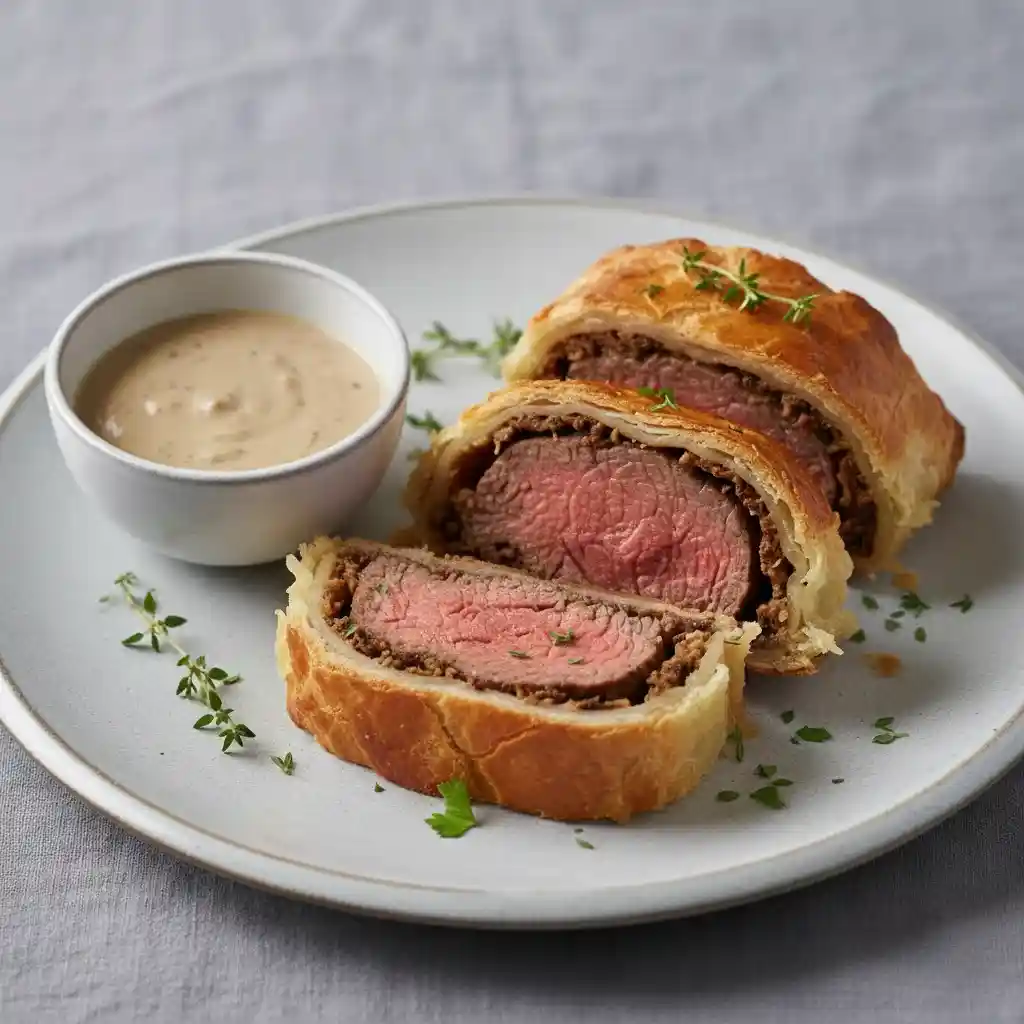
When I finally sliced into it, the gentle crackle of the crust felt like a tiny reward for the time I had given it. That moment stays with me—simple, steady, and satisfying.
Beef wellington has a quiet confidence to it. It doesn’t need a celebration to feel special.
The layers alone—tender meat, rich mushroom mixture, and a crisp pastry shell—create a dish that feels complete and well-balanced. It has presence without shouting.
This recipe follows that same approach: patient steps, clear flavors, and a result that feels warm and accomplished.
A dish that makes you slow down for a moment and appreciate what you’ve made.
Table of Contents
Beef Wellington Recipe
Ingredients
- 1 center-cut beef tenderloin (about 700–900 g), trimmed
- Salt, to taste
- Black pepper, to taste
- 2 tablespoons oil
- 2 tablespoons butter
- 400 g mushrooms, very finely chopped
- 1 small onion, finely chopped
- 2 garlic cloves, minced
- 1 teaspoon fresh thyme leaves
- 1 tablespoon Worcestershire sauce
- 6–8 slices of turkey or chicken-based deli-style “ham” (thin slices)
- 1 sheet puff pastry, chilled
- 2 teaspoons Dijon mustard
- 1 egg, beaten (for brushing)
- Flour, for dusting
Instructions
- Pat the beef tenderloin dry with a paper towel. Season it generously on all sides with salt and black pepper.
- Heat oil in a heavy pan over high heat. Once hot, sear the beef on all sides until it forms a deep golden-brown crust. Do not cook the inside; this step is only to lock in juices. Transfer the meat to a plate to cool completely.
- In the same pan, add butter. Once melted, stir in the chopped mushrooms, onion, garlic, thyme, and a pinch of salt and pepper. Cook over medium heat, allowing all moisture to evaporate completely. Keep stirring until the mixture becomes dry and paste-like. This can take 10–15 minutes. Stir in Worcestershire sauce and cook for one more minute. Let the mixture cool fully.
- Once the beef is cool, lightly brush it with Dijon mustard on all sides. Set aside.
- Lay a large piece of cling wrap on your counter. Arrange the turkey or chicken deli slices on the wrap, slightly overlapping, forming a rectangle wide enough to wrap around the beef.
- Spread the cooled mushroom mixture evenly over the slices, pressing it gently so it adheres.
- Place the beef at the edge of this layer. Using the cling wrap, roll everything tightly into a uniform log. Twist the ends of the wrap to keep its shape. Refrigerate for 30 minutes to help it firm up.
- Lightly dust your counter with flour and roll out the puff pastry into a rectangle large enough to fully wrap the beef bundle.
- Remove the cling wrap from the chilled beef. Place the beef in the center of the pastry. Fold the pastry around it, trimming any excess and sealing the edges well. Make sure the seam side is facing down.
- Brush the entire pastry surface with the beaten egg to give it a glossy finish. If desired, lightly score the top with the tip of a knife to create a decorative pattern, but do not cut through.
- Place the wrapped beef on a baking tray lined with parchment paper. Refrigerate for 15–20 minutes again so the pastry stays firm during baking.
- Preheat the oven to 200°C. Bake the Wellington for about 30–35 minutes, or until the pastry is deeply golden and crisp. The center of the beef should be medium-rare to medium when sliced.
- Remove from the oven and allow it to rest for 10 minutes before slicing. Resting keeps the juices inside and ensures clean, beautiful slices.
- Slice gently with a sharp serrated knife and serve with a creamy sauce or gravy of your choice.
What Are The Best Tips For Making Beef Wellington Turn Out Perfectly?
Making Beef Wellington feels much easier when you understand the small details that protect the texture and keep the layers balanced.
Each step contributes to a crisp crust and a tender center, so paying attention to these basics can help you achieve a better result.
- Use a completely dry mushroom mixture: Cook it long enough so all moisture evaporates, because extra liquid can make the pastry soft.
- Chill each layer properly: Cooling the wrapped tenderloin helps it hold its shape and keeps the pastry firm.
- Sear the meat quickly on high heat: A fast sear keeps the center pink while creating a flavorful crust.
- Seal the pastry securely: Tight edges prevent juices from leaking out as it bakes.
- Rest before slicing: Resting gives cleaner slices and keeps the layers intact.
Why Does The Mushroom Layer Matter In Beef Wellington?
The mushroom layer plays a major role in both flavor and texture. It adds richness, protects the pastry from moisture, and keeps everything balanced as it bakes.
Without this layer, the beef may lose more juices and the pastry can turn soft instead of crisp.
- Adds deep flavor: Mushrooms cook down into a rich mixture that enhances the taste of the beef.
- Keeps pastry crisp: It creates a barrier that absorbs moisture so the pastry stays firm.
- Improves structure: This layer helps the Wellington hold its shape more neatly.
How Do You Keep The Pastry Crispy?
A crisp pastry comes from heat control and moisture control. When each component is prepared correctly, the crust rises well and stays firm instead of turning soggy.
- Dry ingredients before wrapping: Wet beef or a damp mushroom mixture softens the pastry.
- Use chilled pastry: Cold pastry puffs better and stays neat while baking.
- Bake at high temperature: Strong heat helps the crust rise quickly and turn golden.
How Do You Know When The Beef Wellington Is Cooked?
You can check doneness through both appearance and temperature. A properly baked Wellington has a golden crust and a tender center that stays juicy without overcooking.
- Use a thermometer: This gives the most reliable result for the level of doneness you prefer.
- Look for even color inside: A slight pink center means the beef is still tender and moist.
- Check the pastry: Fully puffed and golden pastry usually signals that the inside is close to ready.
Can You Make Beef Wellington Ahead Of Time?
Preparing parts of the dish earlier saves time and reduces stress, especially when cooking for more people. You can prep most layers in advance while still baking fresh on the final day.
- Prepare the mushroom mixture early: It stores well in the fridge and holds its flavor.
- Wrap the beef early: Chilling helps the shape stay firm and tidy.
- Add pastry later: Wrapping right before baking keeps the crust from absorbing moisture.
What Can You Serve With Beef Wellington?
You can pair Beef Wellington with sides that balance its rich flavor. Lighter or creamy accompaniments keep the plate complete without overwhelming the dish.
- Light vegetables: They bring freshness and color to the meal.
- Creamy sauces: These blend smoothly with the beef without overpowering it.
- Simple potato dishes: Mashed, roasted, or puréed potatoes complement the textures well.
What Are Common Mistakes To Avoid When Making Beef Wellington?
Avoiding basic mistakes helps protect the flavor and texture of your Wellington. Paying attention to small details makes a big difference in the final result.
- Overcooking the beef: This can make it firm instead of tender.
- Skipping the cooling steps: Without chilling, the layers can shift or lose shape.
- Using wet ingredients: Moisture is the main reason pastry becomes soft.
- Cutting too early: This causes juices to run and soften the crust.
How To Store Beef Wellington Properly?
Proper storage helps you keep the flavors fresh and the pastry in good shape. The way you cool and wrap it plays an important role in how well it reheats later.
- Cool completely before storing: Warm layers create steam, softening the crust.
- Wrap slices securely: Airtight wrapping protects texture and prevents dryness.
- Use the oven for reheating: It brings back crispness better than a microwave.
Can You Reheat Beef Wellington Without Losing Texture?
Reheating gently keeps the beef tender and the pastry firm. Slow, even heat works better than fast, strong heat.
- Use the oven on low heat: This keeps the pastry crisp and the center moist.
- Avoid microwaving: Strong heat can soften the pastry and change the texture.
- Heat only what you need: Smaller portions warm more evenly.
How Do You Prevent The Beef From Drying Out?
Moisture control starts early, from searing to wrapping to resting. Each step plays a part in keeping the beef tender and juicy.
- Sear the meat well: This traps moisture inside the tenderloin.
- Create a strong barrier: The mushroom layer and pastry protect the beef during baking.
- Rest before slicing: Resting allows the juices to spread evenly inside.
You May Also Like To Check Out These Articles
- 55 Creative Christmas Cake Ideas To Spark Holiday Cheer
- 40 Christmas Cheesecake Recipes For A Joyful Holiday Season
- 50 Easy Christmas Cupcakes You’ll Want To Bake All Season
- 50 Time-Saving Christmas Cookie Recipes Everyone Will Devour
- 130 Yummy Christmas Treats For The Perfect Celebration
- 118 Christmas Desserts To Make Your Holidays Sweet
- 180+ Mouthwatering Christmas Dinner Recipes To Try This Holiday Season
- 55 Delicious Christmas Appetizer Ideas
- 160 Easy And Festive Christmas Potluck Ideas
- 55 Best Christmas Snacks For Party
- 20 Best Non Alcoholic Christmas Drinks
- 72 Joyful Christmas Baking Ideas For The Festive Season
- 26 Easy Christmas Candy Recipes
- 40 Best Christmas Side Dishes
- 10 Simple Tips For A Cozy Christmas Coffee Bar
- Christmas Cake Pops
- Christmas Tree Cake Pops
- Christmas Cookie Cake
- Christmas Tree Cake Cheesecake
- Cranberry Christmas Cake
- Grinch Christmas Cake
- Cranberry Pecan Cheese Ball
- Crock Pot Cranberry Meatballs
- Sugared Cranberries
- Authentic Cacio E Pepe Recipe
- Cheese Straws With Puff Pastry
- Best Mince And Cheese Pie Recipe
- Sweet And Sour Meatballs With Pineapple Chunks
- Honey Sriracha Meatballs
- Meatballs On A Stick
- Creamy Carbonara Recipe With Cream Of Mushroom
- Chicken Pot Pie
- Lamb Loin Chops
- Meat Lasagna Recipe With Ricotta
- Broccoli Cheese Casserole
- Broccoli Bake
- Roast Beef Sliders Hawaiian Rolls