For me, an eye of round roast has always been tied to calm, steady moments in the kitchen.
I grew up watching this dish come out of the oven looking firm on the outside but soft and rosy at the center, and that contrast always impressed me.
It felt like a quiet reward for paying attention, giving the meat time to rest, and treating it with patience instead of rushing through the process.
When I started cooking it on my own, I realized how much control you actually have over a cut that many people overlook.
A little care, a steady oven, and the right timing create a roast that slices beautifully and stays tender from edge to edge.
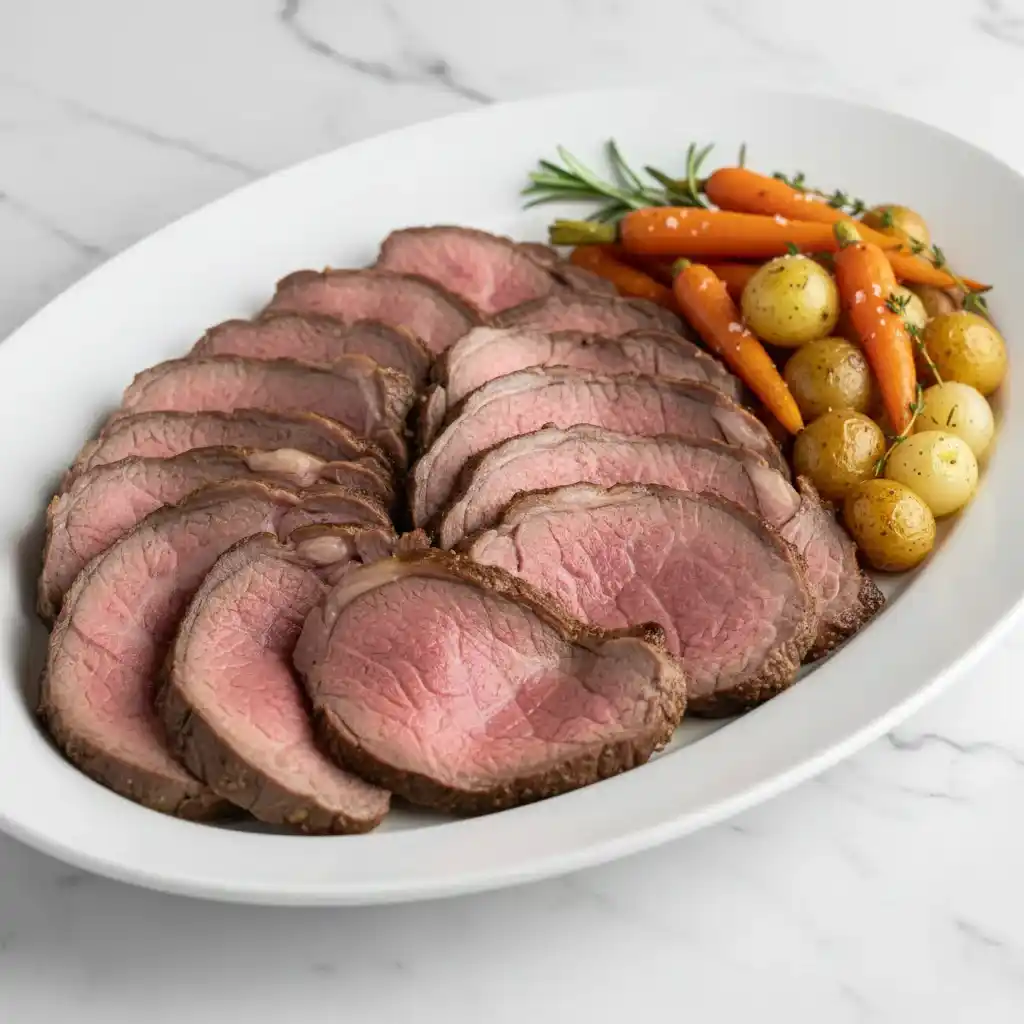
I still enjoy the part where the knife glides through the meat and each slice falls neatly onto the platter. It’s the kind of dish that makes you slow down and appreciate the details.
The vegetables on the side bring their own charm. Baby potatoes and carrots roast quietly while the meat cooks, picking up the herbs and turning golden without much effort.
It all comes together in a way that feels peaceful and balanced—straightforward flavors, clean edges, and a meal that speaks for itself without any loud claims.
This recipe is built around that feeling: simple work, steady heat, and a roast that looks beautiful on the table.
If you appreciate food that rewards patience and precision, this dish will feel natural to you.
Table of Contents
Eye Of Round Roast Recipe
Ingredients
For The Roast
- 1 whole eye of round roast (about 3 to 3.5 lbs)
- 2 tbsp olive oil
- 2 tsp fine sea salt
- 1 ½ tsp black pepper
- 1 ½ tsp garlic powder
- 1 tsp onion powder
- 1 tsp dried thyme
- 1 tsp dried rosemary, crushed
- 1 tsp paprika
For The Vegetables
- 1 lb baby potatoes, rinsed
- 1 lb baby carrots, tops trimmed if needed
- 2 tbsp olive oil
- 1 tsp salt
- ½ tsp black pepper
- ½ tsp dried thyme
- ½ tsp dried rosemary
Instructions
- Remove the roast from the refrigerator about 45 minutes before cooking so it can warm slightly. This helps it cook more evenly and stay tender.
- Preheat your oven to 500°F (260°C). This high initial temperature is essential because it creates a beautifully browned crust without overcooking the inside.
- Pat the roast dry on all sides using paper towels. A dry surface helps the seasoning stick and helps the roast sear properly.
- Mix the salt, pepper, garlic powder, onion powder, thyme, rosemary, and paprika in a small bowl.
- Rub the roast with olive oil, then coat every side with the seasoning blend. Press the seasoning on so it adheres well.
- Place the roast on a rack inside a roasting pan. A rack lifts the meat, letting heat circulate and giving you even cooking.
- Put the roast into the oven (still at 500°F). Roast for exactly 15 minutes. This is the step that forms the crust.
- After 15 minutes, reduce the oven temperature to 325°F (160°C) without opening the oven door. Continue roasting for 55 to 65 minutes, depending on the size of your roast. You are aiming for an internal temperature of 130–135°F (54–57°C) for medium-rare.
- While the roast cooks, prepare the vegetables. Place the baby potatoes and baby carrots in a bowl. Add olive oil, salt, pepper, thyme, and rosemary. Toss until every piece is lightly coated.
- When the roast has about 35 minutes left, spread the seasoned vegetables on a baking sheet. Place them in the oven so they cook alongside the roast. Bake until the potatoes are soft and the carrots are lightly caramelized.
- Once the roast reaches your target temperature, remove it from the oven. Immediately tent it loosely with foil and let it rest for 20 to 25 minutes. Resting prevents the juices from running out and keeps every slice moist.
- After resting, transfer the roast to a cutting board. Use a sharp carving knife and slice against the grain into thin, even slices. Cutting against the grain is one of the secrets to keeping this naturally lean cut tender.
- Arrange the slices on a platter and place the roasted potatoes and carrots on the side. Serve right away while everything is warm.
Why Does Temperature And Resting Matter For Eye Of Round Roast?
You want to think about temperature and resting because this cut of meat is very lean, so how you cook it and let it rest affects whether it stays juicy or becomes dry.
- Internal Temperature Controls Doneness: To get a medium‑rare roast (pink inside, tender), you aim for the internal temperature around 130–135°F (54–57°C) before removing from oven. This prevents overcooking.
- Resting Lets Juices Settle: After cooking, you should rest the roast for about 20 to 25 minutes. Resting helps redistribute the juices inside the meat, so when you slice it, the slices stay moist and not dry.
- Quick Sear Then Low Heat Helps Form Crust Without Overcooking: Starting at a high oven temperature for a short time forms a golden crust on the outside, then reducing heat lets the inside cook through gently — giving you crusty exterior and tender interior.
How Thin Should You Slice The Roast And Why Does That Matter?
Slicing technique really affects how tender and enjoyable the roast feels when you eat it.
- Slice Against The Grain: Always cut perpendicular to the muscle grain. This makes the meat easier to chew, because it shortens the long muscle fibers.
- Slice Thin For Tenderness: Because eye of round is lean, cutting into thin slices helps each bite feel more tender and less chewy.
- Use A Sharp Knife For Clean Slices: A sharp carving knife (or slicer) helps you get clean, even slices that look nice and are easier to eat.
What Could Go Wrong — And How To Prevent It?
Understanding common problems helps you avoid them.
- Dryness Because Of Overcooking: Eye of round has little fat, so if you overcook, it becomes dry. Use a meat thermometer, and aim for medium-rare rather than well done.
- Tough Meat Because Of Wrong Slicing: Slicing with the grain or in thick slices makes it chewier. That’s why slicing thin and against the grain is important.
- Uneven Cooking If Meat Is Too Cold: If you put a cold roast straight into the oven, outer part may overcook while inner stays raw. Letting it sit 30–45 minutes at room temperature before roasting helps cook more evenly.
Can You Try Other Cooking Methods With Eye Of Round Roast — Like Slow‑Cooking Or Sous-Vide?
Yes. Eye of round is versatile enough for different techniques — but each has its pros and cons.
- Slow‑Cooking Or Low‑Temperature Roast: Cooking slowly at low temperature (and finishing with a quick sear for crust) can keep the roast more tender. This reduces risk of drying out compared to high-heat only methods.
- Sous‑Vide Method: Some people use sous‑vide to cook eye of round — it allows precise temperature control and can yield tender results. But if cooked too long, meat can become “mushy” instead of firm. So timing matters carefully.
- Best For Thin Slices Or Sandwiches: If you plan to use the roast for sandwiches or thin‑slice servings, methods like slow‑roast or sous‑vide + sear tend to work better because they help keep texture manageable and meat easier to slice thin.
How Should You Store Raw Eye Of Round Before Cooking?
Proper storage before cooking ensures meat stays fresh and safe.
- Refrigerate At 40°F (4°C) Or Lower: Keep raw roast in the fridge, ideally on the bottom shelf so juices won’t drip onto other foods — this helps avoid cross‑contamination.
- Cook Or Freeze Within 3–5 Days: For fresh beef roasts, 3 to 5 days is a safe time window to cook or freeze. If you don’t cook within that time, freeze it for longer storage.
How Should You Store Cooked Roast And Leftovers?
Once cooked, proper storage preserves flavor and avoids spoilage or food‑borne illness.
- Cool Quickly And Refrigerate Within 2 Hours: After cooking, let the roast cool somewhat (don’t leave at room temperature too long), then put into the fridge. Big roasts cool slowly — slicing into portions or placing in shallow containers helps them cool faster.
- Use Airtight Containers Or Wrap Tightly: Cover leftovers well (foil, plastic wrap, or sealed containers) to prevent drying, protect from fridge odors, and avoid contamination.
- Eat Within 3–4 Days Or Freeze: Cooked beef roasts are generally safe in the fridge for up to 3–4 days, then quality degrades or risk grows. For longer storage, freeze in airtight packaging.
Can You Freeze Eye Of Round Roast — Raw Or Cooked — And For How Long?
Freezing is a good backup if you don’t plan to eat the roast soon or want to preserve leftovers long‑term.
- Raw Roast Freezing: Wrap tightly (plastic wrap + foil or freezer bag). Beef roasts can last 6 to 12 months in freezer while keeping good quality.
- Cooked Roast Freezing: If you freeze properly, cooked roast can stay good for a few months (though texture might degrade over time). Label containers with date so you track freshness.
Should You Season Or Marinate Eye Of Round Ahead Of Time For Better Flavor?
Yes — a bit of planning before cooking can make a big difference.
- Marinating Or Dry Brining Helps: Because this cut is lean, marinating (or dry brining — rubbing salt or seasoning and letting meat sit in fridge for some hours) can help meat absorb more flavor and stay slightly moist.
- Give Seasoning Time To Penetrate: If you plan marinating or dry brining, let seasonings rest on meat for a few hours or overnight in the fridge. This gives seasoning time to seep in and improves flavor throughout, not just on surface.
- Balance Flavors With Sides And Sauces: Since eye of round doesn’t have much fat or richness, serving it with flavorful sides (like vegetables) or a sauce can elevate the dish and make overall meal more satisfying.
How To Know If Eye Of Round Roast Has Gone Bad — Raw Or Cooked?
Better to check carefully — smell or appearance alone might not be enough.
- Check Smell And Look For Changes: If raw meat smells sour or “off”, or has changed color (greenish, grey, slimy), discard it. Cooked leftovers with strange smell, texture or mold are unsafe.
- Don’t Keep Too Long: Even refrigerated, don’t keep beyond recommended 3–5 days (raw) or 3–4 days (cooked). Freezing helps extend shelf life but quality gradually drops the longer you keep frozen.
You May Also Like To Check Out These Recipes
- Christmas Cake Pops
- Christmas Tree Cake Pops
- Christmas Cookie Cake
- Christmas Tree Cake Cheesecake
- Cranberry Christmas Cake
- Grinch Christmas Cake
- Red Velvet Cheesecake Cake
- Gingerbread Cake
- Pistachio And White Chocolate Winter Wonderland Cake
- Oreo Cheesecake Cupcakes
- Black Bottom Cupcakes
- Oreo Cupcakes
- Gingerbread Cupcakes
- Red Velvet Cupcakes
- Lemon Cupcakes
- Cranberry White Chocolate Cookies
- Santa Cookies
- Melted Snowman Cookies
- Cranberry Orange Cookies
- Linzer Cookies With Almond Flour
- Grinch Sugar Cookies
- Ooey Gooey Butter Cookies
- Cookies And Cream Cookies
- Raspberry Thumbprint Cookies
- Christmas Tree Rice Crispy Treats
- Starbucks Cranberry Bliss Bars
- Christmas Oreo Balls
- Cranberry Pecan Cheese Ball
- Mexican Champurrado
- Christmas Tree Pizza
- Christmas Chocolate Peppermint Bark
- Peanut Butter Rice Krispie Treats
- Sausage Hash Brown Casserole
- Christmas Cream Cheese Mints
- Beef Wellington
- Perfect Prime Rib
- Bubble Room White Christmas Cake Recipe
- Mouthwatering Roasted Leg Of Lamb With Potatoes And Carrots
- Delicious Lamb Chops In Air Fryer
- Zuni Roast Chicken With Bread Salad Recipe
- Lamb Loin Chops
- Meat Lasagna Recipe With Ricotta
- Broccoli Cheese Casserole
- Broccoli Bake
- Roast Beef Sliders Hawaiian Rolls
- Cheese Fondue Without Alcohol
- Christmas Tree Pull Apart Bread
- Keto Sausage Balls
- Chicken And Noodles
- Venison Italian Meatballs
- Hashbrown Casserole
- Southern-Style Vegan Collard Greens
- Baked Brie With Jam
- Festive Holiday Salad
- Grinch Fruit Kabobs
- Spinach Puffs
- Beef Bacon Wrapped Green Beans
- Christmas Cheese Ball
- Christmas Fudge
- Crock Pot Cranberry Meatballs
- Sugared Cranberries
- Authentic Cacio E Pepe Recipe
- Cheese Straws With Puff Pastry
- Best Mince And Cheese Pie Recipe
- Sweet And Sour Meatballs With Pineapple Chunks
- Honey Sriracha Meatballs
- Meatballs On A Stick
- Creamy Carbonara Recipe With Cream Of Mushroom
- Chicken Pot Pie
- Christmas Simmer Pot Recipe
- Eggnog Cheesecake
- Pecan Tassies
- Peanut Butter Blossom Cookies
- Christmas Snowman Veggie Tray
- Christmas Fruit Platter
- Christmas Puppy Chow Chex Mix
- Toasted Ravioli
- 3 Ingredients Grape Jelly Meatballs
- Vegan Spinach Artichoke Dip
- Green Beans Almondine
- Eye Of Round Roast
- Turkey Pinwheels
- Whipped Feta Dip
- Gluten Free Yorkshire Pudding
- Slow Roasted Beef Tenderloin
- Creamed Spinach
- Deviled Eggs
- Caramel Popcorn
- Christmas Brownies