I used to think jelly belonged on toast and toast only. You know the kind—smooth, soft, super sweet, no spice, and always the same. But everything changed the first time I tasted jelly with heat.
I was a little suspicious, honestly. Peppers in jelly? That didn’t sound right. But once I actually tried it, I couldn’t stop thinking about it.
The sweet was still there, but now it had a kick that made every bite more exciting. This habanero jelly hits hard in the best way.
It’s sweet, fiery, glossy, and full of flavor. You get the bold taste of fresh habaneros, but they’re balanced out by a light tang and just enough sugar to take the edge off.
And it’s not just heat for the sake of it—habaneros have this natural fruitiness that makes them perfect for jelly. It’s wild how well it works.
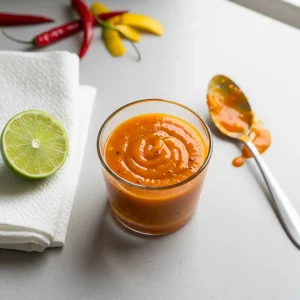
I’ve made this more times than I can count, and every batch looks just like this—bright, shiny, thick enough to spread, but soft enough to melt into warm bread, grilled chicken, or even cheese.
It’s the jelly I never knew I wanted. And now, it’s the one I always keep a jar of.
Table of Contents
Homemade Habanero Jelly Recipe
Ingredients
- 1 ½ cups finely chopped red bell peppers (remove seeds)
- ½ cup finely chopped orange bell peppers (remove seeds)
- ½ cup finely chopped habanero peppers (stemmed and seeded)
- 1 ½ cups apple cider vinegar
- 6 cups granulated sugar
- 1 packet (1.75 oz) powdered fruit pectin
- ½ teaspoon salt
- ½ teaspoon fresh lemon juice (optional for brightness)
Instructions
- In a large saucepan or non-reactive pot, combine chopped red bell peppers, orange bell peppers, and habanero peppers. Pour in the apple cider vinegar. Let this mixture sit for about 10 minutes to allow the flavors to release.
- Add the salt and lemon juice (if using) to the mixture. Place the pot over medium-high heat and bring it to a gentle boil. Stir frequently to prevent sticking.
- Add the powdered pectin and stir constantly. Keep it at a rolling boil for 1 full minute. This activates the pectin and starts the jelly process.
- Stir in all the sugar at once. Keep stirring until the sugar fully dissolves. Increase the heat and bring the mixture back to a hard boil—this means a boil that doesn’t stop bubbling even while stirring.
- Boil the mixture hard for 1 minute, stirring continuously. Remove from heat and skim off any foam that rises to the top.
- Let the jelly sit for 5 minutes. This helps distribute the chopped peppers more evenly through the jelly. Stir gently once more before filling jars.
- Using a ladle and funnel, carefully pour the hot jelly into clean, sterilized jars, leaving ¼ inch of headspace. Wipe rims with a damp cloth and seal with lids and rings.
- Process the jars in a boiling water bath for 10 minutes (adjusting for altitude if needed).
- Let the jars rest on a towel-lined surface at room temperature for 24 hours without moving. You’ll hear the satisfying “pop” of lids sealing.
- Store in a cool, dry place for up to 12 months. Once opened, refrigerate and use within 3 weeks.

What Can I Use Habanero Jelly For?
Habanero jelly is more than just a spread—it’s a bold flavor booster that can be used in many creative ways.
- Glaze For Meats: Brush it on grilled chicken, roasted turkey, baked salmon, or even ribs during the final minutes of cooking for a sweet and spicy finish.
- Cheese Board Favorite: Serve it with cream cheese, goat cheese, or sharp cheddar. The heat pairs beautifully with creamy or aged cheeses.
- Sandwich & Burger Spread: Swap your regular sauces with habanero jelly for an unexpected kick in burgers, sliders, or grilled cheese.
- Stir Into Dips or Dressings: Mix a spoonful into sour cream or mayo to create spicy dips. Blend it with vinegar and oil for a sweet-heat vinaigrette.
- Topping For Breakfast Items: Add a little to warm toast, waffles, pancakes, or biscuits for a fun twist on morning flavors.
How Spicy Is Habanero Jelly?
The heat level in habanero jelly depends on how many peppers you use and how they’re prepared.
- Moderate To High Heat: Habaneros are naturally very hot, but the sugar and vinegar in the jelly help balance the intensity. Most people feel a warm burn that builds slowly but doesn’t overwhelm.
- Removing Seeds Reduces Heat: If you want it a little milder, take out the seeds and white membranes before chopping the peppers. That’s where most of the heat lives.
- Adjustable To Taste: You can use fewer habaneros or combine them with milder peppers like bell peppers to tone things down without losing flavor.
Can I Use Other Peppers With Habanero?
Yes, you can absolutely mix in other peppers for flavor, color, or to control heat.
- Bell Peppers: They add sweetness and texture without increasing heat. Red and orange ones work well for color.
- Jalapeños Or Serranos: For medium heat lovers, these offer a nice in-between if habaneros are too strong.
- Banana Or Sweet Peppers: Great if you want a mellow jelly with just a little zing.
Combining different peppers can make the jelly more complex in taste and beautiful in appearance.
Why Did My Habanero Jelly Not Set?
If your jelly turns out runny, don’t worry—it’s usually an easy fix once you understand what went wrong.
- Incorrect Boiling Time: The jelly must reach a full, rolling boil that continues even while stirring. Undercooking can prevent it from setting.
- Pectin Activation: If the pectin isn’t fully dissolved or not boiled long enough after adding sugar, the jelly won’t gel properly.
- Too Much Liquid: Extra vinegar or juicy peppers can water down the mixture. Stick to the measured amounts.
- Humidity Or Weather: High humidity can affect setting, especially if you’re making jelly during a rainy or very humid day.
You can reboil the jelly with a little more pectin and sugar to fix it if needed.
How Long Does Homemade Habanero Jelly Last?
Proper storage is the key to keeping your jelly fresh, flavorful, and safe to eat.
- Unopened Jars: If sealed and processed correctly in a hot water bath, jars can last up to 12 months in a cool, dark pantry.
- Opened Jars: Once opened, store in the refrigerator and use within 2 to 3 weeks. Always use clean utensils to avoid contamination.
- Signs Of Spoilage: If you see mold, smell anything sour or strange, or notice a change in color or texture, throw it out right away.
Do I Have To Use A Water Bath?
Yes, if you want to store the jelly at room temperature and keep it safe for long-term use.
- Prevents Bacteria Growth: Water bath processing kills harmful bacteria and ensures a tight seal, which is important for food safety.
- Creates Shelf-Stable Jars: Without it, you’ll need to refrigerate your jelly right away and consume it within a few weeks.
- Not Optional For Storage: Skipping this step risks spoilage even if the jars seal. A sealed lid doesn’t always mean it’s safe.
Can I Freeze Habanero Jelly?
Yes, freezing is a great backup if you don’t want to can or if you have leftovers.
- Use Freezer-Safe Containers: Glass jars with enough headspace or thick plastic containers work well.
- Leave Room At The Top: Jelly expands when frozen, so leave about ½ inch of space to avoid cracking.
- Thaw Slowly In Fridge: Move frozen jelly to the fridge 24 hours before using. Stir gently after thawing for best texture.
Frozen jelly is usually good for 6 to 9 months, but it’s best eaten within the first few months for top quality.
How Can I Tell When My Jelly Is Ready?
Getting the jelly to the right consistency can feel tricky, but there are simple ways to check.
- Spoon Test: Dip a cold metal spoon into the boiling jelly. Let it cool for a few seconds. If the jelly clings to the spoon and wrinkles slightly when pushed with your finger, it’s ready.
- Thermometer Method: The jelly should reach 220°F at sea level. You may need to adjust slightly based on altitude.
- Watch The Bubbles: When the jelly thickens, the bubbles will become slower and glossier. That’s a sign it’s nearly done.
Can I Reduce The Sugar In This Recipe?
Reducing sugar in jelly isn’t as simple as it is in other recipes—it affects texture, safety, and shelf life.
- Sugar Helps The Jelly Set: It’s not just for taste. Sugar works with pectin to create the gel-like structure.
- Use Low-Sugar Pectin: If you want to cut back on sugar, buy a pectin specifically designed for low- or no-sugar recipes.
- Do Not Cut Sugar In Regular Recipes: Reducing sugar in standard jelly recipes can lead to runny results and even spoilage over time.
What Should I Serve With Habanero Jelly?
This jelly is super flexible and can go from breakfast to dinner to party food with no problem.
- Cream Cheese & Crackers: A classic combo that always works. Add a spoonful of jelly over a cream cheese block and serve with crackers.
- Grilled Meats: Spoon it over pork chops, chicken, or kebabs. The heat blends well with smoky flavors.
- Breakfast Biscuits Or Bagels: Spread it on toasted biscuits or fresh bagels with butter or cheese.
- Mix With BBQ Sauce: Stir some into BBQ sauce for a spicy, sticky glaze that’s great for ribs or wings.
You May Also Like To Check Out These Recipes
- Pineapple Chicken
- Pineapple Teriyaki Chicken
- Grilled Corn On The Cob With The Husks
- Mango Salsa
- Beef Hamburger
- Red Potato Salad
- Broccoli Slaw
- Grilled Chicken Kabobs
- Grilled Pizza
- Grilled Peaches
- Grilled Pineapple
- Grilled Eggplant
- Grilled Potatoes
- Grilled Sweet Potatoes
- Grilled Chicken Thighs
- Grilled Chicken Wings
- Grilled Chicken Breast
- Grilled Lamb Chops
- Avocado Egg Salad
- Mexican Street Corn
- Caprese Sandwich
- Slow Cooker Vegetarian Baked Beans
- Slow Cooker Chicken Tacos
- Pico De Gallo
- Caprese Skewers
- Grilled Corn Salsa
- Skillet Lemon Herb Chicken Breasts
- Mexican Street Corn Dip
- Chicken Broccoli Casserole
- Summer Squash Casserole
- Stuffed Zucchini
- Slow Cooker Beef Barbacoa
- Slow Cooker Chicken Tacos
- Chicken Macaroni Salad
- Fried Green Tomatoes
- Grilled Beef Steak
- Smash Burger Tacos
- Mexican Street Corn Pasta Salad
- Corn And Black Bean Salsa
- Cowboy Candy Candied Jalapeños
- Fiery & Flavorful Habanero Hot Sauce