Every Thanksgiving, I used to wonder why my turkey looked golden but never tasted as juicy as the ones my grandmother made.
She had a secret that wasn’t written down anywhere—it lived in her old kitchen habits and the way she prepared things ahead of time.
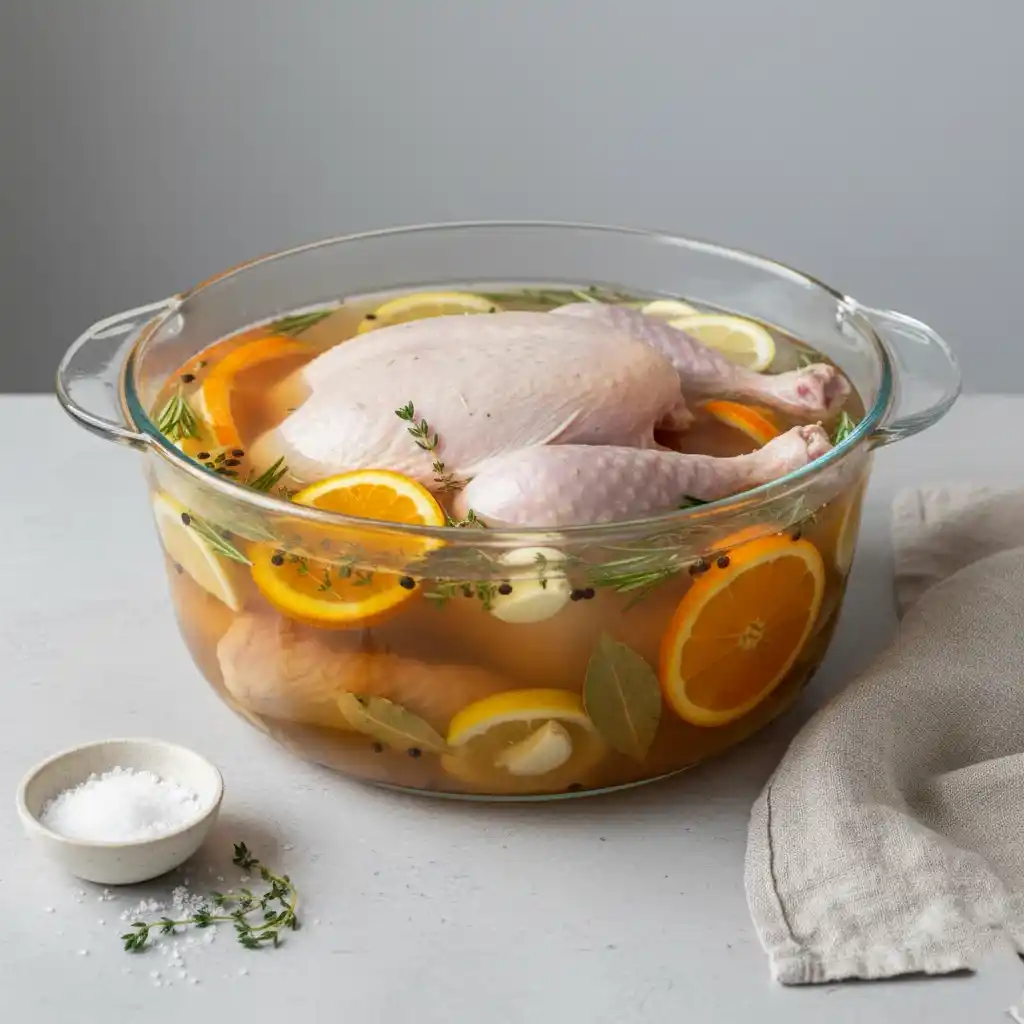
One year, she finally let me watch her work, and that’s when I saw it: a large pot filled with herbs, citrus, and salt swirling around a whole turkey. The scent was enough to make the whole house feel alive.
That day taught me what truly makes a turkey unforgettable—it starts long before the oven ever turns on.
The brine she made wasn’t complicated; it was thoughtful. Fresh oranges, lemon slices, garlic, and herbs soaked into the bird, giving it flavor that roasted all the way through.
When the turkey finally came out of the oven, it wasn’t just juicy—it tasted cared for.
Now, I never skip this step. Every time I prepare a brine, I’m reminded of the calm rhythm of her kitchen—the gentle stir of salt dissolving, the bright scent of citrus, and the quiet anticipation of a meal that means something.
If you’ve ever wanted your turkey to taste like it came from someone who truly knew their way around a home kitchen, this brine is the way to make that happen.
Table of Contents
Turkey Brine Recipe
Ingredients
- 1 gallon water
- 1 cup kosher salt
- ½ cup brown sugar
- 1 tablespoon whole black peppercorns
- 5 bay leaves
- 4 sprigs fresh rosemary
- 6 sprigs fresh thyme
- 1 tablespoon whole allspice (optional for depth)
- 1 head garlic, halved crosswise
- 1 large onion, quartered
- 1 orange, sliced
- 1 lemon, sliced
- 1 gallon cold water (for cooling the brine)
- 1 whole turkey (10–14 lbs), thawed
- Ice as needed
Instructions
- In a large pot, combine 1 gallon of water, salt, brown sugar, peppercorns, bay leaves, rosemary, thyme, allspice, garlic, onion, orange slices, and lemon slices.
- Place the pot over medium-high heat and stir occasionally until the salt and sugar are fully dissolved. The mixture should be fragrant, not boiling.
- Once the salt and sugar have dissolved, remove the pot from the heat and let the brine cool to room temperature.
- Pour in the additional 1 gallon of cold water to bring the brine to the right temperature for soaking.
- Check that the brine is completely cool before adding the turkey—warm brine can partially cook the bird and ruin the texture.
- Place the turkey in a large food-safe container or brining bag. Pour the cooled brine over it, ensuring the turkey is fully submerged. Add ice if needed to keep it cold.
- Refrigerate the brining turkey for 12 to 18 hours, turning once halfway through if possible.
- When ready to cook, carefully remove the turkey from the brine. Discard the brining liquid.
- Rinse the turkey thoroughly under cool water, both inside and out, to remove excess salt and aromatics.
- Pat the turkey completely dry with paper towels. Let it rest uncovered in the refrigerator for 30–60 minutes to allow the skin to dry for better browning during roasting.
What Does Brining A Turkey Do?
Brining helps the turkey stay juicy and flavorful during cooking. When the turkey sits in the saltwater mixture, the meat absorbs both moisture and seasoning, resulting in a more tender texture and deeper taste.
- Adds Moisture: The salt in the brine draws moisture into the meat, keeping it juicy even after hours of roasting.
- Improves Texture: Brining loosens muscle fibers, making the turkey soft and easy to carve.
- Enhances Flavor: The herbs, citrus, and spices infuse the turkey with natural seasoning all the way through.
- Prevents Dryness: Even if the turkey cooks a little longer, brining helps protect it from drying out.
How Long Should You Brine A Turkey?
The length of brining depends on the turkey’s size, but timing is key for proper flavor and texture.
- Whole Turkey (10–14 lbs): Brine for about 12 to 18 hours for the best flavor balance.
- Larger Turkey (15–20 lbs): Brine for up to 24 hours if needed, but don’t go over that or it may become too salty.
- Smaller Cuts: Turkey breasts or drumsticks need around 6 to 8 hours only.
- Tip: Always keep the turkey fully submerged and chilled while brining to maintain safety and freshness.
Should You Rinse The Turkey After Brining?
Yes, rinsing is very important after brining. It helps remove excess salt and herbs from the surface before cooking.
- Rinse Thoroughly: Use cool running water and gently wash both inside and outside.
- Dry Well: Pat the turkey completely dry with paper towels to help the skin brown beautifully during roasting.
- Rest Before Cooking: Let it rest uncovered in the refrigerator for 30–60 minutes to allow the skin to dry properly.
What Happens If You Brine Too Long?
Leaving the turkey in the brine too long can make it overly salty or change its texture.
- Over-Salted Meat: The salt can penetrate too deeply, making the meat taste too salty.
- Mushy Texture: Prolonged soaking may break down the proteins too much, affecting the meat’s structure.
- Flavor Imbalance: Strong herbs or spices can overpower the turkey’s natural taste.
- Tip: Stick to the recommended timing for the most balanced flavor and tenderness.
Can You Brine A Frozen Turkey?
You can, but it’s better to thaw it first for even flavor and safety. A partially frozen turkey won’t absorb the brine evenly.
- Fully Thawed Turkey: Always make sure the turkey is thawed in the refrigerator before brining.
- Cold Brine Only: Never pour warm brine on a frozen or partly frozen turkey—it can cause uneven soaking.
- Safety First: Keep the turkey cold during the process to prevent bacteria growth.
What Type Of Salt Is Best For Turkey Brine?
The salt you choose affects both the flavor and the texture of the turkey.
- Kosher Salt: Most recommended because it dissolves well and is easy to measure.
- Avoid Table Salt: It’s too fine and can make the brine overly salty.
- Sea Salt: Works well if you prefer a natural, mineral-rich flavor, but measure it carefully.
- Tip: Stick to one type of salt and follow exact measurements to keep the balance right.
Can You Reuse Turkey Brine?
No, once you’ve soaked the raw turkey in the brine, it must be discarded for food safety.
- Raw Poultry Contamination: The liquid contains bacteria after contact with raw meat.
- One-Time Use Only: Always prepare a fresh batch for each turkey.
- Proper Disposal: Pour it down the drain and rinse the container thoroughly with hot soapy water.
Should You Add Sugar To A Turkey Brine?
Yes, a little sugar can balance the saltiness and enhance browning during roasting.
- Flavor Balance: Brown sugar or honey adds a light sweetness that complements the savory taste.
- Better Color: Sugar helps the turkey skin caramelize, giving it a golden and glossy finish.
- Optional Ingredient: You can skip it if you prefer a fully savory flavor profile.
Can You Make Turkey Brine Ahead Of Time?
Making the brine in advance can save time and improve flavor.
- Prepare 1–2 Days Early: Store it covered in the refrigerator until ready to use.
- Cool Completely: Always let the brine reach room temperature before refrigerating it.
- Shake or Stir Before Use: The herbs and spices may settle, so mix again before pouring over the turkey.
How To Store Brined Turkey Before Cooking?
Proper storage is essential to keep the turkey safe and flavorful before roasting.
- Keep It Cold: Store the brining turkey in the refrigerator at all times.
- Use Ice If Needed: If your container doesn’t fit, place it in a cooler packed with ice.
- Avoid Warm Temperatures: Never leave it out at room temperature, even for a short time.
- After Brining: Rinse, pat dry, and refrigerate for up to one hour before roasting.
How To Store Cooked Turkey?
Once your turkey is cooked, handle it correctly to maintain freshness and flavor.
- Refrigerate Promptly: Store leftovers within 2 hours of cooking to prevent spoilage.
- Use Airtight Containers: Keeps the meat moist and prevents it from absorbing fridge odors.
- Shelf Life: Cooked turkey lasts 3–4 days in the refrigerator.
- Freezing Option: For longer storage, freeze the turkey for up to 3 months.
- Reheating Tip: Warm the turkey gently in the oven with a splash of broth to keep it juicy.
You May Also Like To Check Out These Recipes
- 60 Best Thanksgiving Dressing And Stuffing Recipes
- 50 Thanksgiving Dinner Ideas That Will Impress Everyone
- 50 Must-Try Thanksgiving Side Dishes You’ll Love
- 50 Irresistible Thanksgiving Appetizers For Your Feast
- 50 Thanksgiving Potluck Ideas To Make You The Star
- 50 Thanksgiving Desserts You Can Make In A Snap
- 50 Thanksgiving Cake Ideas
- 50 Thanksgiving Brunch Ideas
- 50 Thanksgiving Cupcake Ideas
- 50 Easy Thanksgiving Snacks
- 55 Thanksgiving Pie Ideas
- 80 Thanksgiving Menu Ideas
- 55 Thanksgiving Turkey Recipes
- 50 Thanksgiving Salad Recipes
- 80 Easy Thanksgiving Treats
- 50 Best Vegan Thanksgiving Ideas
- 60+ Gluten Free Thanksgiving Recipes
- 85+ Vegetarian Thanksgiving Recipes
- 50 Thanksgiving Vegetable Sides
- 80 Best Thanksgiving Cookies
- 50 Comforting Thanksgiving Casseroles To Savor Every Bite
- Hot Cocoa Bar Ideas For Christmas
- Crock Pot Hot Chocolate
- Corn Casserole
- Brussels Sprout Casserole
- Green Bean Casserole
- Sweet Potato Casserole
- Cranberry Jalapeno Dip
- Potato Candy
- Pecan Pie Cookies
- Stewed Apples
- Apple Cheesecake Bars
- Cream Cheese Caramel Apple Dip
- Cinnamon Roll Apple Pie
- Baked Apples
- Homemade Twix Bars
- Caramel Apple Slices
- Butternut Squash Lasagna
- Butternut Squash Casserole
- Vegan Apple Cake
- Stuffed Mushrooms With Cream Cheese
- Ground Turkey Soup
- Crockpot Turkey Chili
- Turkey Gravy
- Turkey Sliders On Hawaiian Rolls
- Crockpot Turkey Breast
- Roast Turkey
- Mashed Potatoes
- Cranberry Brie Bites
- Pumpkin Chili
- Easy Baked Ziti With Ground Beef And Ricotta
- Pumpkin Dip With Cream Cheese
- Butternut Squash Chili
- Ground Turkey Tater Tot Casserole
- Butternut Squash Salad
- Roasted Acorn Squash
- Autumn Salad With Maple Dressing
- Chicken Pot Pie Casserole With Biscuits
- Chicken And Wild Rice Casserole
- Stuffing Chicken Casserole
- Crockpot Chicken Dumplings
- Turkey Cheese Ball
- Ambrosia Salad With Fruit Cocktail