Capirotada is more than a dessert in my house—it’s a sign that the season has changed.
The smell of cinnamon syrup bubbling on the stove, the sound of toasted bread crackling as it comes out of the oven, and the sight of nuts and dried fruit layered between slices of golden bread—it all feels familiar and special at the same time.
This dish has been on our table every Lent since I can remember. My mom used to save the good loaf of bread just for this.
She’d slice it thick, toast it until just crisp, and let us help drizzle the syrup before layering in all the toppings—raisins, apricots, almonds, walnuts, and crumbled cheese that softened as it baked.
She didn’t write anything down. She just knew. Now I make it the same way. Toasted bread soaking up that sweet, spiced syrup. Bites of chewy dried fruit next to crunchy nuts.
A little salty cheese to balance the sweetness. Every piece is soaked through but still has texture. Nothing dry, nothing soggy. Just right.
Most people think of capirotada as a dessert, but in our family, it’s also breakfast the next day—and maybe even dinner if there are leftovers.
We don’t argue over the last piece. We just cut it small enough to share. If you’ve never made it before, don’t worry.
It’s not fancy. It’s just honest food that’s built to be shared. And once you try it, you’ll understand why we wait all year to make it again.
Table of Contents
Traditional Mexican Capirotada Recipe (Sweet Bread Pudding)
Ingredients
- 1 large loaf of French bread (or bolillo), sliced into ½-inch thick rounds
- 1½ cups brown sugar (preferably piloncillo if available), grated or chopped
- 2½ cups water
- 1 cinnamon stick
- 3 whole cloves
- ½ teaspoon ground cinnamon
- 1 tablespoon unsalted butter
- ¼ cup raisins
- ¼ cup dried apricots, chopped
- ¼ cup dried cherries or glace cherries
- ¼ cup dried cranberries (optional for extra tartness)
- ⅓ cup walnuts, roughly chopped
- ⅓ cup whole almonds
- ⅓ cup pecans, roughly chopped
- ½ cup crumbled white cheese (queso fresco or mild feta)
- Nonstick cooking spray or extra butter for greasing
Instructions
- Preheat your oven to 350°F (175°C). Lightly grease a medium-sized baking dish (around 9×13 inches) with butter or spray.
- Lay the sliced bread on a baking sheet and toast it in the oven for about 10–12 minutes, flipping once, until golden and crispy. This helps prevent the bread from becoming too soggy later.
- In a medium saucepan, combine the water, brown sugar, cinnamon stick, cloves, and ground cinnamon. Bring it to a boil over medium heat, then reduce the heat and simmer for 10–12 minutes until the syrup thickens slightly. Remove from heat, strain out the cloves and cinnamon stick, and stir in the butter until melted.
- Now start assembling: place a layer of toasted bread slices on the bottom of the greased baking dish. Pour a few ladles of the syrup over the bread until it’s nicely moistened.
- Sprinkle some raisins, apricots, cherries, cranberries, walnuts, almonds, and pecans over the moistened bread layer. Crumble a bit of cheese on top.
- Repeat the layering process—bread, syrup, fruits and nuts, cheese—until all the ingredients are used up. Make sure to finish with a generous layer of fruits, nuts, and cheese on the top.
- Cover the dish with foil and bake for 25 minutes. Then uncover and bake for another 15–20 minutes, or until the top is golden, slightly crisp, and the syrup is bubbling gently around the edges.
- Let it rest for 10–15 minutes before serving to allow the flavors to settle.
Tips For Best Texture And Flavor Of Capirotada
- Use day-old or slightly stale bread. It holds up better to the syrup without falling apart.
- Toasting the bread is a key step—it gives structure and adds flavor.
- Crumbling the cheese rather than slicing helps distribute the salty bite evenly throughout the sweet layers.
- You can adjust the nuts or fruits based on what you have, but stick with a mix of textures: chewy, crunchy, and soft.
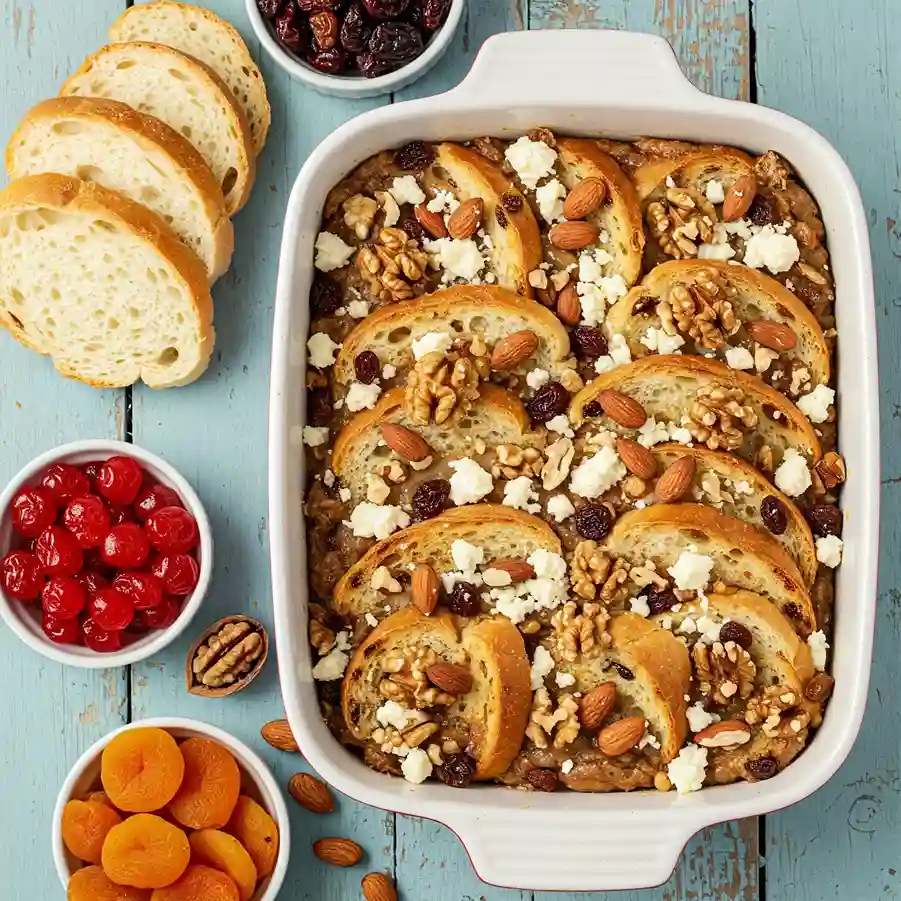
What Is Capirotada Made Of?
Capirotada is made with simple, everyday ingredients layered together to create a deep, rich flavor. Each part plays a special role in the dish, from texture to sweetness to that signature savory bite.
- Bread: Thick slices of toasted French bread or bolillo help absorb the syrup without falling apart.
- Sweet Syrup: Made from water, brown sugar (or piloncillo), cinnamon stick, and cloves. This syrup soaks into the bread and gives it flavor and moisture.
- Dried Fruits: Raisins, apricots, cherries, and cranberries bring sweetness and chewiness.
- Nuts: Almonds, walnuts, and pecans add a crunchy contrast.
- Cheese: Crumbled queso fresco or mild feta balances out the sweetness with a bit of saltiness.
- Butter: Just a small amount melts into the syrup for a richer taste.
All these ingredients work together to create a layered, flavorful bread pudding that’s sweet, nutty, and slightly savory.
Why Is Capirotada Eaten During Lent?
Capirotada has been eaten during Lent for hundreds of years. It’s not just tradition—it also carries deep meaning for many families.
- Symbolic Ingredients: The bread represents the body, the syrup stands for the blood, the cinnamon stick for the wooden cross, and the cloves for the nails. Even the cheese can symbolize the holy shroud.
- Meat-Free: Since many people avoid meat on Fridays during Lent, capirotada offers a filling and satisfying dish without breaking those customs.
- Seasonal Memory: Capirotada has been passed down through generations as a dish linked to this special time of year, helping families mark Lent in a personal way.
What Type Of Bread Works Best For Capirotada?
Not all breads are the same when it comes to soaking up syrup. Here’s what to look for:
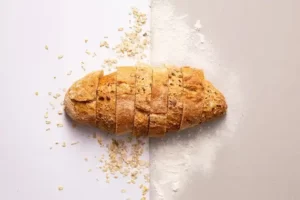
- Thick-Cut, Crusty Bread: Use day-old French bread, bolillo, or baguette. These hold their shape after toasting and don’t turn mushy.
- Dry or Slightly Stale: Bread that’s a little dried out soaks in the syrup without falling apart.
- Avoid Soft Sandwich Bread: It will break down too quickly and turn soggy when baked.
Toasting the bread is an important step—it adds structure and flavor, making sure each bite is soft inside and lightly crisp outside.
Can I Use Different Fruits Or Nuts?
Yes, capirotada is flexible, and you can switch ingredients depending on what you have or prefer.
- Fruits You Can Use: Raisins, golden raisins, dried apricots, dried pineapple, dried figs, dates, or sweetened cherries.
- Nut Options: Walnuts, almonds, pecans, pistachios, or cashews all work well and bring different textures.
- Tips For Substituting: Chop large fruits or nuts so they mix better between the bread layers. Use unsalted nuts if possible so the dish doesn’t get too salty.
What Cheese Should Be Used In Capirotada?
The cheese may seem like a strange addition to a sweet dish, but it’s one of the most important ingredients.
- Queso Fresco: This is the most traditional choice. It’s crumbly, mild, and doesn’t melt completely, which keeps the texture unique.
- Mild Feta: A good substitute if queso fresco isn’t available. It adds a similar salty flavor.
- Avoid Melty Cheeses: Stay away from mozzarella or cheddar—they change the texture and don’t work well in this dish.
Why Is The Syrup Important And How Do You Make It?
The syrup gives capirotada its flavor. It seeps into the bread and brings all the layers together.
- Made With Brown Sugar Or Piloncillo: Boiled with water, cinnamon, and cloves until slightly thick.
- Spiced For Depth: The cinnamon and cloves make the syrup warm and rich without needing many extra spices.
- Simmered, Not Rushed: Let it cook slowly so the flavors combine well and the sugar melts completely.
Once the syrup is ready, it gets poured over the layers to soak into the bread and carry the flavor through the dish.
How Do I Stop Capirotada From Getting Too Soggy?
Texture is key in capirotada. You want soft, soaked bread, but not mushy or watery.
- Use Toasted Bread: Toast it until golden and crisp so it holds up during baking.
- Don’t Over-Saturate: Pour the syrup evenly, but don’t flood the dish. Let each layer absorb a bit before adding more.
- Bake Covered, Then Uncovered: This helps the inside stay moist while the top gets slightly crispy.
Can Capirotada Be Made Ahead Of Time?
Yes, capirotada is a great make-ahead dish and may even taste better the next day.
- Refrigerate Overnight: Assemble and refrigerate it (unbaked) the night before. Bake the next day for fresher texture.
- Or Bake First: You can also fully bake it, then store and reheat it as needed.
- Flavors Develop Over Time: The syrup soaks deeper into the bread as it sits, making each bite richer.
Just keep it properly covered in the fridge so it doesn’t dry out.
How Should You Store Leftover Capirotada?
Capirotada stores well and tastes just as good after a day or two.
- Cool It Completely: Let the dish cool before storing so steam doesn’t make it soggy.
- Use Airtight Containers: Place leftovers in an airtight box or cover the baking dish tightly with foil or plastic wrap.
- Refrigeration: Store in the fridge for up to 4 days. The flavor stays strong, and the bread stays soft.
- Freezing Option: You can freeze it in portions. Wrap each piece in plastic and store in a sealed container for up to a month.
Reheat in the oven at a low temperature or microwave individual slices. Add a splash of milk or syrup before reheating if it looks dry.
Is Capirotada Served Warm Or Cold?
Both options work, and it depends on your personal taste.
- Warm: Fresh from the oven or reheated, the cheese softens and the bread is moist and steamy.
- Room Temperature: It holds its shape and is easier to slice and serve neatly.
- Cold: Some people love it chilled from the fridge, especially the next day when the flavors have settled.
Try all three and see what you like best—each way has its charm.
Can I Make A Smaller Batch?
Yes, capirotada can be scaled down easily without losing its flavor.
- Use Half The Ingredients: Halve everything, and bake in a smaller dish.
- Check Early: Bake time may be slightly shorter, so check 10 minutes earlier than usual.
- Same Method: Toast the bread, layer, pour syrup, and bake—just in smaller portions.