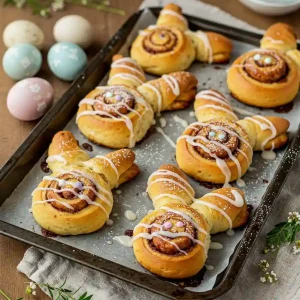
Every early November, Mexican bakeries fill with round loaves that sparkle under a coat of sugar. This is Pan de Muerto—bread baked to honor loved ones who have passed on.
The tender crumb carries the scent of fresh orange, while crossed strips of dough recall bones and the small knob in the center stands for a skull.
Families place the loaf on ofrendas beside marigolds and candles, trusting its sweet aroma to guide spirits back home.
At dawn many still tear off a warm piece, dip it in hot chocolate, and share quiet stories.
The loaf on your table keeps that rite alive, even if you are miles from a Mexican mercado.
Follow the recipe below and you will pull from the oven the same golden circles you see in shops from Oaxaca to Juárez—soft, fragrant, and dusted in shimmering sugar.
Table of Contents
Traditional Pan De Muerto Recipe
Ingredients
- 3 ½ cups all-purpose flour (plus extra for kneading)
- ½ cup whole milk (lukewarm)
- ¼ cup water (room temperature)
- 3 tsp active dry yeast
- ½ cup granulated sugar (plus extra for coating)
- 4 large eggs (room temperature)
- ½ cup unsalted butter (softened)
- ½ tsp salt
- 1 tbsp orange zest (preferably from fresh oranges)
- 1 tsp orange blossom water (optional but recommended)
- ½ tsp ground cinnamon (optional for warmth)
For Brushing & Coating
- ¼ cup unsalted butter (melted)
- ½ cup granulated sugar (for dusting after baking)
Instructions
- In a small bowl, combine the lukewarm milk, water, and yeast. Add 1 tablespoon of the measured sugar. Let it sit for 10 minutes until foamy on top.
- In a large mixing bowl, whisk the eggs with the rest of the sugar until pale and slightly thickened. Stir in the orange zest and orange blossom water.
- Add the yeast mixture into the egg mixture and combine.
- Gradually add the flour, one cup at a time, mixing as you go. Add the salt with the last portion of flour.
- Knead the dough by hand or using a stand mixer with a dough hook for 8–10 minutes. Once the dough starts coming together, add softened butter one tablespoon at a time. Continue kneading until the dough is smooth, elastic, and slightly tacky but not sticky. This may take 10–15 minutes in total.
- Form the dough into a ball, place it in a lightly oiled bowl, cover with a clean towel or plastic wrap, and let it rise in a warm place for 1½ to 2 hours or until doubled in size.
- Once risen, punch down the dough and cut off about ¼ of it to form the “bones” and “skull” decorations. Shape the remaining dough into smooth, round balls (for medium-sized breads, divide into 4 portions).
- Roll small portions of the reserved dough into thin bone-like strips (about 2 for each round) and a small ball for the center.
- Drape the dough “bones” over each round in a criss-cross shape and place the dough ball on top center to represent the skull.
- Place the formed loaves on a parchment-lined baking sheet, cover them lightly, and let them proof again for about 45–60 minutes until slightly puffy.
- Preheat oven to 175°C (350°F). Bake the bread in the middle rack for 18–22 minutes, or until golden brown on top and baked through. Internal temperature should reach around 88–90°C (190–195°F).
- Remove from oven and immediately brush each loaf generously with melted butter.
- While still warm, sprinkle with granulated sugar, gently pressing it in so it sticks evenly.
- Let cool on a wire rack before serving.

What Is The Meaning Behind Pan De Muerto?
Pan de Muerto is more than just bread—it holds deep cultural and spiritual meaning in Mexico.
This bread is specially made during Día de Muertos (Day of the Dead), which is celebrated on November 1st and 2nd to honor and remember loved ones who have passed away.
The round shape represents the cycle of life and death. The dough strips on top are shaped like bones and arranged in a cross to symbolize the four directions or the four elements (earth, fire, water, and air).
The small ball in the center is believed to represent the skull or the heart of the departed.
It’s often placed on altars with candles, flowers, and photos as an offering to guide spirits back to the world of the living for a brief reunion.
This bread is not just food—it’s tradition, memory, and a way of keeping loved ones close.
How Long Does Pan De Muerto Stay Fresh?
Proper storage keeps your Pan de Muerto soft and tasty for days. Here’s what you need to know.
- Room Temperature: Store the bread in an airtight container or wrap it tightly in plastic wrap. It will stay soft for about 3 days. Keep it in a cool, dry place.
- Refrigeration: It’s not recommended to refrigerate Pan de Muerto, as it tends to dry out faster. Room temperature is better unless your home is very hot or humid.
- Freezing: For longer storage, freeze it. Wrap each loaf tightly in plastic wrap and place it in a freezer-safe bag. It can stay frozen for up to 1 month. Thaw at room temperature for a few hours before serving. To freshen it up, warm it in the oven for a few minutes.
Can I Make Pan De Muerto Ahead Of Time?
Yes, making it ahead is possible and helpful, especially if you’re preparing for an altar or family event.
- Make the dough the night before: Prepare the dough and let it rise once. Then shape the loaves, cover them, and refrigerate overnight. Bring them to room temperature and allow them to finish proofing before baking.
- Bake and freeze: You can fully bake the bread and freeze it without the sugar topping. When you’re ready to serve, thaw it, brush with butter, sprinkle sugar, and warm it slightly in the oven.
- Store baked bread for a short time: If making it 1–2 days ahead, store at room temperature wrapped tightly to keep it soft.
Why Does The Bread Have A Bone Shape On Top?
This shape is not random—it tells a story. The design of Pan de Muerto reflects the purpose of the bread in honoring the dead.
- Symbol of bones: The long strips represent bones, and the round shape in the center is a skull. These pieces are placed on top of the round loaf to mimic the form of a body or represent a person who has passed away.
- Spiritual meaning: These decorations aren’t just for looks. They represent the person being honored and are deeply tied to the Day of the Dead’s meaning, where death is not feared but respected and remembered with love.
Why Does Pan De Muerto Taste Like Orange?
That orange flavor is one of the most memorable parts of this bread. It’s there for a reason.
- Symbolic fragrance: The aroma of orange zest and orange blossom water is believed to help guide spirits back to the altar. The scent is both sweet and spiritual.
- Traditional choice: Orange has been used in Mexican pan dulce for many years. It adds brightness and contrast to the richness of the eggy dough, and makes Pan de Muerto stand out from other breads.
What’s The Texture Of Pan de Muerto Like?
Pan de Muerto has a special texture that sets it apart from regular bread. It’s soft, fluffy, and slightly chewy inside, with a sweet crunchy crust from the sugar on top.
- Rich and airy inside: Thanks to eggs and butter, the dough rises well and has a light, tender crumb that almost melts in your mouth.
- Crackly top: Once it’s brushed with melted butter and coated in sugar, the outside has a delicate crunch, giving you the perfect balance of soft and crisp in every bite.
Can I Use Other Flavors Besides Orange?
Yes, you can change the flavor, but orange is traditional and symbolic. Still, if you want to make it your own, here are a few options.
- Lemon zest: A fresh alternative if you prefer a citrus taste without orange.
- Anise seeds: Traditional in some regions of Mexico. Just crush lightly and add to the dough for a gentle licorice flavor.
- Cinnamon: Adds warmth and depth, especially when mixed into the dough or sprinkled on top with sugar.
- Vanilla: A small splash can enhance the dough without changing the traditional flavor too much.
Can I Make Mini Pan De Muerto Or One Large Loaf?
Absolutely. The dough is flexible and can be shaped to suit your needs.
- Mini versions: Great for sharing or giving as gifts. Divide the dough into small balls and use less dough for the bone shapes. Bake for slightly less time—usually around 15 to 17 minutes.
- One large loaf: Make one big loaf using all the dough and larger bone decorations. Increase the baking time and keep an eye on the color. A large loaf might take 30–35 minutes to fully bake.
- Same dough, same flavor: No matter the size, the texture and flavor remain the same. Just adjust baking time and watch for doneness.
What Can I Serve With Pan De Muerto?
Pan de Muerto is often served with warm drinks during Día de Muertos gatherings. Here are some traditional and tasty options.
- Hot chocolate: The most popular pairing. Thick, rich Mexican-style hot chocolate brings out the orange notes in the bread.
- Coffee or café de olla: Coffee brewed with cinnamon and piloncillo adds an earthy flavor that balances the sweetness.
- Milk or atole: A warm, thick drink made from corn flour, perfect for breakfast or evening snacks during this season.
This bread is often enjoyed in the early morning or at night, sometimes even at cemeteries where families spend time with their loved ones.
Can Kids Help Make Pan De Muerto?
Yes, it’s a great way to teach kids about tradition while having fun in the kitchen.
- Shaping dough: Kids can help roll the balls and make the bone shapes. It’s creative and hands-on.
- Sprinkling sugar: After baking, children love brushing the bread with butter and adding sugar on top.
- Learning culture: It’s a chance to explain the meaning behind the bread and why it’s important, making it a full learning experience.
Pan de Muerto brings history and family together through one beautiful loaf. With care and the right method, you can recreate the same softness, shine, and symbolism in your own home.