
Lasagna has always felt tied to long afternoons and quiet patience—the slow simmer, the layered work, the wait before the table is set. Some days, that rhythm feels grounding.
Other days, it feels heavy. Lasagna soup was born from that gap for me. I wanted the same deep taste and warmth, but in a form that fits real life, real energy levels, and real evenings when standing at the stove too long feels like too much.
This soup carries the heart of lasagna in a bowl you can hold close. The sauce is rich and steady, the pasta soft but structured, the meat deeply cooked, and the cheese added at the end so it melts gently instead of disappearing.
It feels familiar without asking for hours. It feels full without being overwhelming. More than anything, it feels honest—food that meets you where you are and stays with you long after the bowl is empty.
Table of Contents
Lasagna Soup Recipe
Ingredients
• 2 tablespoons olive oil
• 1 medium yellow onion, finely diced
• 5 garlic cloves, finely minced
• 500 g ground beef or ground chicken
• 3 tablespoons tomato paste
• 800 g crushed tomatoes (2 cups)
• 240 ml tomato sauce (1 cup)
• 1.2 liters chicken or beef stock (5 cups), hot
• 2 teaspoons dried Italian seasoning
• 1 teaspoon paprika
• ½ teaspoon red chili flakes, adjust to taste
• 1½ teaspoons salt, or to taste
• 1 teaspoon black pepper
• 1 bay leaf
• 200 g broken lasagna sheets or mafalda pasta
• Fresh basil leaves, torn, for garnish
Cheese Topping
• ¾ cup ricotta cheese
• ½ cup mozzarella cheese, finely shredded
• ¼ cup parmesan cheese, finely grated
Instructions
- Place a large heavy-bottom pot over medium heat and add olive oil. Once warm, add the diced onion and cook for 4–5 minutes, stirring often, until soft and translucent. This step builds the base flavor of the soup.
- Add the minced garlic and cook for 30–40 seconds until fragrant, stirring constantly to prevent burning.
- Add the ground meat to the pot. Break it up well using a wooden spoon and cook for 6–8 minutes until fully browned and no pink remains. Allow slight caramelization for deeper flavor.
- Stir in the tomato paste and cook it with the meat for 2 minutes. This removes raw tomato taste and deepens the overall flavor.
- Add crushed tomatoes and tomato sauce. Stir thoroughly and scrape the bottom of the pot to release any browned bits.
- Pour in the hot stock, then add Italian seasoning, paprika, red chili flakes, salt, black pepper, and bay leaf. Stir well and bring to a gentle boil.
- Reduce heat to medium-low and simmer uncovered for 15 minutes so the flavors can blend and the broth thickens slightly.
- Add the broken lasagna sheets or pasta. Stir well to prevent sticking and simmer for 10–12 minutes, stirring occasionally, until the pasta is tender but not mushy.
- While the pasta cooks, mix ricotta, mozzarella, and parmesan cheese in a bowl until smooth and creamy.
- Once the pasta is cooked, remove the bay leaf and taste the soup. Adjust salt or seasoning if needed.
- Ladle the hot soup into bowls. Add a generous spoonful of the cheese mixture on top of each serving and allow it to melt gently into the soup.
- Garnish with fresh basil leaves and serve hot.
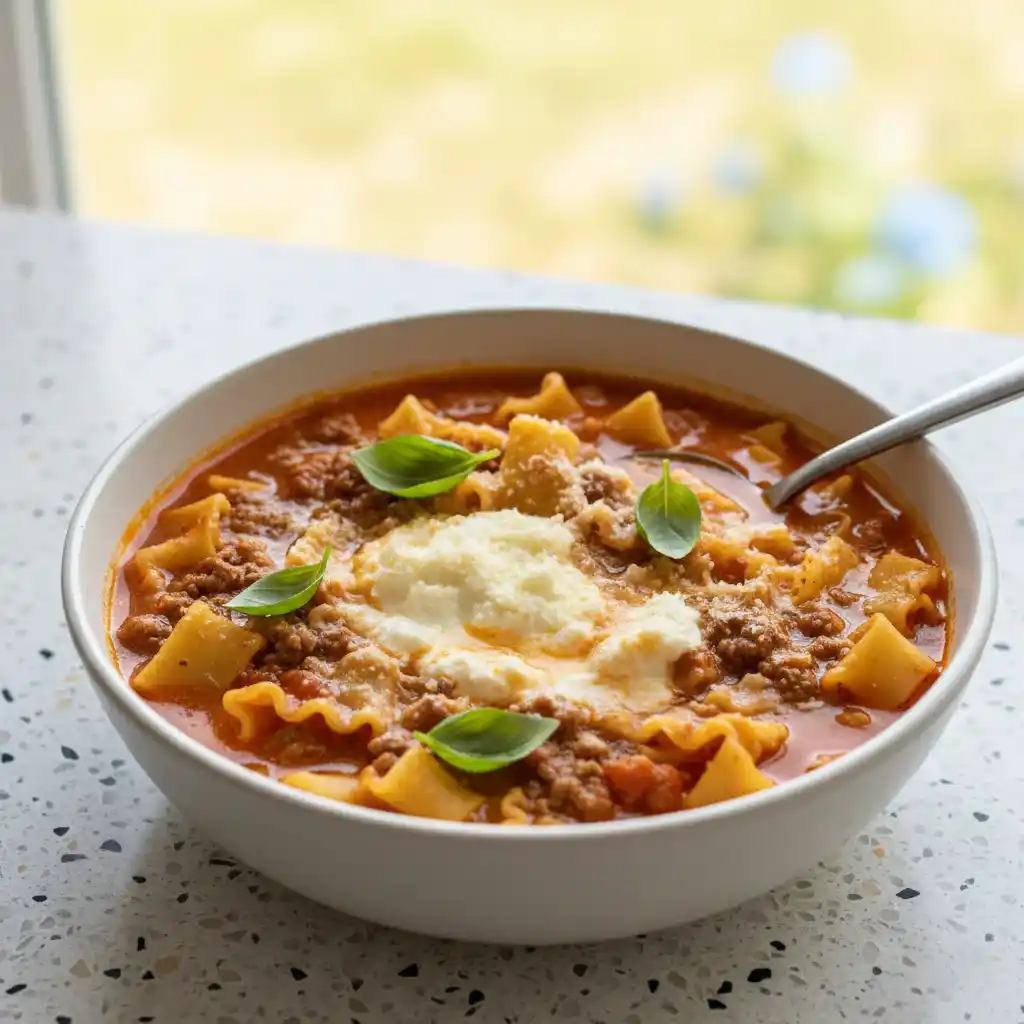
What Makes Lasagna Soup Taste Like Real Lasagna?
Lasagna soup works because each layer of classic lasagna flavor is built carefully, just in a different form.
• Slow-Cooked Tomato Base: The combination of tomato paste, crushed tomatoes, and tomato sauce creates depth. Cooking the tomato paste with meat first removes sharp acidity and gives the soup that rich, cooked-all-day taste.
• Properly Browned Meat: Browning the meat until it develops color adds a deep savory flavor. If the meat is rushed, the soup tastes flat instead of full.
• Wide Pasta Shapes: Broken lasagna sheets or mafalda pasta hold sauce in their folds. This gives each spoonful the same texture and satisfaction as layered pasta.
• Cheese Added At The End: Ricotta, mozzarella, and parmesan are added per bowl, not mixed into the pot. This keeps the cheese creamy instead of grainy and mimics how lasagna is finished.
Why Is Lasagna Soup Thick And Not Brothy?
Lasagna soup is meant to be hearty and spoon-coating, not thin like regular soup.
• Starch From Pasta: As the pasta cooks, it releases starch into the liquid. This naturally thickens the soup without flour or cream.
• Tomato Concentration: Using both crushed tomatoes and tomato sauce gives body and structure instead of a watery base.
• Controlled Liquid Amount: The broth is measured so the soup stays rich even after simmering.
If it thickens too much after resting, adding a small splash of stock while reheating brings it back to the right texture.
Can You Use Different Pasta In Lasagna Soup?
Yes, but the shape you choose changes how the soup feels.
• Wide Pasta Is Best: Broken lasagna sheets, mafalda, or bow-tie pasta trap sauce and cheese better.
• Small Pasta Changes Texture: Elbow or ditalini pasta makes the soup feel more like tomato noodle soup rather than lasagna.
• Avoid Very Thin Pasta: Angel hair or vermicelli overcooks quickly and turns mushy.
If using a different pasta, cook it just until tender and stir often to prevent sticking.
How Do You Keep Pasta From Getting Mushy?
Pasta texture matters a lot in lasagna soup.
• Cook Pasta In The Soup Carefully: Stir every few minutes so pasta does not settle at the bottom.
• Stop Cooking Early: Turn off heat when pasta is just tender. It keeps cooking slightly in the hot soup.
• Store Separately If Possible: For meal prep, storing cooked pasta separately helps maintain texture for several days.
Why Is The Cheese Added On Top Instead Of Mixed In?
This step changes the final result more than most people expect.
• Creamy Texture Control: Ricotta melts gently when added on top, staying soft instead of dissolving.
• Layered Flavor: Each spoonful picks up cheese slowly, just like eating through layers of lasagna.
• Better Reheating: Cheese mixed into the pot can separate when reheated. Adding fresh cheese keeps the soup smooth.
Can You Make Lasagna Soup Ahead Of Time?
Yes, and it often tastes even better the next day.
• Flavor Development: The sauce deepens as it rests, making leftovers richer.
• Smart Storage Method: Store soup base and pasta together for short storage, or separately for longer storage.
• Cheese Always Fresh: Keep the cheese mixture in a sealed container and add it only when serving.
How Do You Store And Reheat Lasagna Soup Properly?
Storage plays a big role in taste and texture.
• Refrigerator Storage: Store soup in an airtight container for up to 3 days. Keep cheese topping in a separate container.
• Freezer Storage: Freeze the soup base without pasta for up to 2 months. Cook fresh pasta when reheating for best results.
• Reheating On Stove: Reheat gently over low heat, stirring often. Add broth or water to loosen if needed.
• Microwave Reheating: Heat in short intervals, stirring between each round to prevent hot spots.
How Do You Adjust Lasagna Soup Thickness?
Lasagna soup thickens naturally as it sits.
• Too Thick: Add warm stock a little at a time while reheating until desired consistency.
• Too Thin: Simmer uncovered for a few extra minutes so excess liquid evaporates.
• Perfect Balance: The soup should coat the spoon but still pour easily into a bowl.
Can You Control Spice And Seasoning In Lasagna Soup?
Yes, seasoning can be adjusted without changing the base flavor.
• Heat Level: Reduce or increase chili flakes depending on preference.
• Salt Balance: Always taste after pasta cooks, since pasta absorbs salt.
• Herb Flavor: Fresh basil added at the end keeps the soup bright without overpowering the sauce.

Lasagna Soup
Ingredients
Method
- Place a large heavy-bottom pot over medium heat and add olive oil. Once warm, add the diced onion and cook for 4–5 minutes, stirring often, until soft and translucent. This step builds the base flavor of the soup.
- Add the minced garlic and cook for 30–40 seconds until fragrant, stirring constantly to prevent burning.
- Add the ground meat to the pot. Break it up well using a wooden spoon and cook for 6–8 minutes until fully browned and no pink remains. Allow slight caramelization for deeper flavor.
- Stir in the tomato paste and cook it with the meat for 2 minutes. This removes raw tomato taste and deepens the overall flavor.
- Add crushed tomatoes and tomato sauce. Stir thoroughly and scrape the bottom of the pot to release any browned bits.
- Pour in the hot stock, then add Italian seasoning, paprika, red chili flakes, salt, black pepper, and bay leaf. Stir well and bring to a gentle boil.
- Reduce heat to medium-low and simmer uncovered for 15 minutes so the flavors can blend and the broth thickens slightly.
- Add the broken lasagna sheets or pasta. Stir well to prevent sticking and simmer for 10–12 minutes, stirring occasionally, until the pasta is tender but not mushy.
- While the pasta cooks, mix ricotta, mozzarella, and parmesan cheese in a bowl until smooth and creamy.
- Once the pasta is cooked, remove the bay leaf and taste the soup. Adjust salt or seasoning if needed.
- Ladle the hot soup into bowls. Add a generous spoonful of the cheese mixture on top of each serving and allow it to melt gently into the soup.
- Garnish with fresh basil leaves and serve hot.
You May Also Like To Check Out These Recipes
- 60 Best Thanksgiving Dressing And Stuffing Recipes
- 50 Thanksgiving Dinner Ideas That Will Impress Everyone
- 50 Must-Try Thanksgiving Side Dishes You’ll Love
- 50 Irresistible Thanksgiving Appetizers For Your Feast
- 50 Thanksgiving Potluck Ideas To Make You The Star
- 50 Thanksgiving Desserts You Can Make In A Snap
- 50 Thanksgiving Cake Ideas
- 50 Thanksgiving Brunch Ideas
- 50 Thanksgiving Cupcake Ideas
- 50 Easy Thanksgiving Snacks
- 55 Thanksgiving Pie Ideas
- 80 Thanksgiving Menu Ideas
- 55 Thanksgiving Turkey Recipes
- 50 Thanksgiving Salad Recipes
- 80 Easy Thanksgiving Treats
- 50 Best Vegan Thanksgiving Ideas
- 60+ Gluten Free Thanksgiving Recipes
- 85+ Vegetarian Thanksgiving Recipes
- 50 Thanksgiving Vegetable Sides
- 80 Best Thanksgiving Cookies
- 50 Comforting Thanksgiving Casseroles To Savor Every Bite
- Hot Cocoa Bar Ideas For Christmas
- Crock Pot Hot Chocolate
- Corn Casserole
- Brussels Sprout Casserole
- Green Bean Casserole
- Sweet Potato Casserole
- Cranberry Jalapeno Dip
- Potato Candy
- Pecan Pie Cookies
- Stewed Apples
- Apple Cheesecake Bars
- Cream Cheese Caramel Apple Dip
- Cinnamon Roll Apple Pie
- Baked Apples
- Homemade Twix Bars
- Caramel Apple Slices
- Butternut Squash Lasagna
- Butternut Squash Casserole
- Vegan Apple Cake
- Stuffed Mushrooms With Cream Cheese
- Crockpot Turkey Chili
- Turkey Gravy
- Turkey Sliders On Hawaiian Rolls
- Crockpot Turkey Breast
- Roast Turkey
- Mashed Potatoes
- Cranberry Brie Bites
- Pumpkin Chili
- Easy Baked Ziti With Ground Beef And Ricotta
- Pumpkin Dip With Cream Cheese
- Butternut Squash Chili
- Ground Turkey Tater Tot Casserole
- Butternut Squash Salad
- Roasted Acorn Squash
- Autumn Salad With Maple Dressing
- Chicken Pot Pie Casserole With Biscuits
- Chicken And Wild Rice Casserole
- Stuffing Chicken Casserole
- Crockpot Chicken Dumplings
- Turkey Cheese Ball
- Ambrosia Salad With Fruit Cocktail
- Turkey Brine
- Ground Turkey Soup
- Broccoli Cheddar Soup
- Mexican Street Corn White Chicken Chili
- Viral Tiktok Cucumber Salad
- Lasagna Soup Recipe
- Vegan Potato Soup
- Baked Cheesy Pumpkin Gnocchi
- Cheeseburger Soup
- Roasted Pumpkin Seeds
- Stuffed Acorn Squash
- Garlic Soup
- Broccoli Cheddar Soup
- Oven Roasted Sweet Potatoes Wedges
- Roasted Sweet Potato Black Bean Bowl
- Pumpkin Soup
- Hatch Chile Chicken Enchiladas
- Hatch Chile Corn Chowder
- Hatch Chile Cream Cheese Dip
- Hatch Green Chile Queso Dip
- Tomato Soup With Fresh Tomatoes
- Marry Me Chicken
- Grilled Hot Honey Chicken
- Chicken Broccoli Casserole
- Skillet Lemon Herb Chicken Breasts
- Healthy Chicken Spaghetti
- Cheesy Chicken Quesadillas
- Chicken and Asparagus Stir Fry
- Chicken Parmesan
- Buffalo Chicken Dip
- Chicken And Dumplings
- Crockpot Butter Chicken
- Creamy Cajun Chicken Pasta
- Chicken Tortilla Soup
- Creamy Sausage Potato Soup
- Roasted Butternut Squash Soup
- Creamy Butternut Squash Soup With Coconut Milk
- Chicken Soup
- Chicken Noodle Soup
- Taco Soup
- Tortellini Soup