I’ve made ribeye many times, but the oven method always brings out a result that feels steady, reliable, and deeply satisfying.
The first time I tried it, I wasn’t standing over the stove guessing what might happen next.
I could finally slow down, breathe, and trust the process. The heat wrapped around the steak evenly, the aroma filled the kitchen, and for a moment the whole place felt calmer.
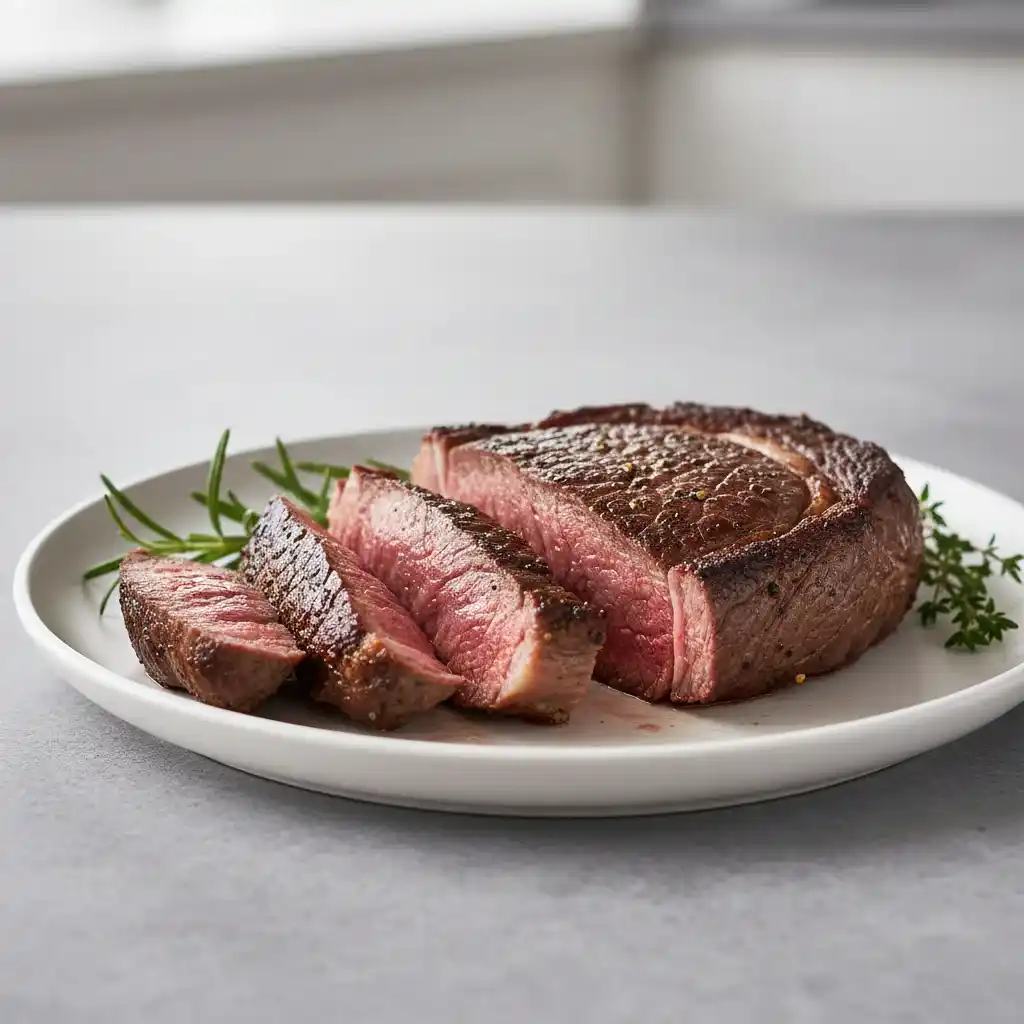
There’s a quiet joy in watching a thick ribeye turn golden in a hot pan, then finish in the oven until it reaches that rosy center that makes every bite feel soft and rich.
It’s the kind of method that teaches you patience. You stand close enough to hear the sizzle, but far enough not to rush it.
And when it rests on the plate, you feel proud of what you created with your own hands.
This recipe gives you that same feeling. A pan, steady heat, a short oven time, and a simple rhythm to follow.
No drama, no stress — just a beautiful steak done the way you want it, with tenderness that speaks for itself.
If you love a deep brown crust and a juicy middle, this approach delivers it every time.
Table of Contents
How To Make Ribeye Steak In The Oven
Ingredients
- 1 thick-cut ribeye steak (about 1 to 1½ inches thick)
- 1 tablespoon olive oil
- 1 teaspoon salt (preferably coarse salt)
- ½ teaspoon black pepper (freshly cracked)
- 1 teaspoon garlic powder
- 1–2 sprigs fresh rosemary
- 1–2 sprigs fresh thyme
- 1 tablespoon butter (optional but adds richness)
Instructions
- Take the steak out of the refrigerator and let it rest at room temperature for 25–30 minutes. This helps it cook evenly and prevents a cold center.
- Preheat your oven to 230°C (450°F). Place the oven rack in the middle position so the heat circulates properly around the steak.
- Pat the ribeye completely dry with paper towels. Any leftover moisture prevents browning and can make the steak steam instead of sear.
- Drizzle the steak with olive oil on both sides and gently rub it in so the seasoning will stick.
- Season the steak generously with salt, black pepper, and garlic powder. Make sure the edges are seasoned too, not just the top and bottom.
- Heat a heavy oven-safe skillet (cast iron is ideal) over high heat on the stove for about 3 minutes. It must be very hot before the steak touches it.
- Carefully place the steak in the hot skillet. You should hear a strong sizzle immediately. Sear for 2 minutes without moving it to develop a deep brown crust.
- Flip the steak using tongs and sear the other side for another 2 minutes. You can tilt the pan slightly and spoon some of the hot oil over the top to deepen the color.
- Add the butter, rosemary, and thyme to the skillet. As the butter melts, tilt the pan and spoon the melted butter over the steak 3–4 times for extra flavor.
- Transfer the entire skillet into the preheated oven. Cook the steak for 4–6 minutes for medium-rare, or 6–8 minutes for medium. The exact time depends on the thickness of your ribeye and how hot your oven runs.
- Remove the skillet from the oven carefully. Use a meat thermometer if you want precision. Aim for:
- 52–54°C (125–130°F) for medium-rare
- 57–60°C (135–140°F) for medium
- Place the steak on a plate and let it rest for at least 5 minutes. Resting allows the juices to settle so the steak stays moist when sliced.
- Slice against the grain for the most tender bite and serve immediately with the pan juices drizzled on top.
How Do You Choose The Right Ribeye For Oven Cooking?
Choosing a good cut makes the final result tender, juicy, and full of flavor.
- Look For Even Marbling: Fat lines running through the meat melt during cooking and keep the steak moist, so choose a ribeye with soft, white streaks spread across the entire piece.
- Pick A Thick Cut: A thickness of 1 to 1½ inches helps the steak stay pink inside without drying out in the oven.
- Check Freshness: The meat should have a fresh smell, a deep red color, and no sticky texture when touched.
- Choose A Consistent Shape: A ribeye with a uniform thickness cooks more evenly and gives you a more controlled result.
Why Should The Steak Sit At Room Temperature Before Cooking?
Letting the steak rest before cooking plays an important role in how it cooks inside and out.
- Warmer Meat Cooks Evenly: A cold center slows the cooking process and can cause the outside to overcook while the inside stays undercooked.
- Better Browning: Moisture reduces browning, and resting helps the surface dry slightly, which helps the crust form faster.
- More Tender Bite: A steak that comes to room temperature cooks gently and stays naturally softer.
Why Is It Important To Dry The Steak Before Searing?
Starting with a dry surface helps you create the same crust you see in high-end steakhouses.
- Dry Meat Produces A Strong Sear: Wet meat steams, and steam prevents browning. Patting the steak dry helps it sear instantly when it touches the pan.
- Better Texture: A dry surface crisps faster and gives the steak a deeper, richer crust.
- Cleaner Flavor: Excess moisture can dilute the seasoning, so drying helps the seasoning stay exactly where you place it.
What Seasoning Works Best For An Oven Ribeye?
Seasoning should enhance the natural taste of the meat without covering it up.
- Use Salt With Larger Crystals: Coarse salt sticks well and melts slowly, helping the ribeye stay juicy.
- Add Freshly Cracked Pepper: Pepper adds a warm, deep aroma that pairs well with beef.
- Use Garlic Powder For Balance: It brings a gentle flavor that blends smoothly without burning.
- Add Herbs For Aroma: Rosemary and thyme add a natural, earthy scent and pair well with butter in the pan.
Why Should You Use A Heavy Pan For Searing?
A strong sear depends on the heat of the pan, and not all pans hold heat the same way.
- Cast Iron Holds Heat: It stays hot even when the steak touches the surface, which helps you get that rich, brown crust.
- Deep Flavor Development: A heavy pan helps the meat caramelize properly, creating more flavor.
- Less Temperature Drop: Thin pans cool down too fast, which weakens the crust and creates uneven coloring.
How Long Should You Sear A Ribeye Before Moving It Into The Oven?
Searing prepares the steak before the oven finishes the inside.
- Two Minutes Per Side Is Usually Enough: This creates a dark crust without burning.
- Short Basting Helps: When butter melts with herbs, spooning it over the steak adds flavor and gives the surface a glossy finish.
- Avoid Moving The Steak Too Much: Leaving it still on the pan helps the crust form properly.
How Long Should A Ribeye Stay In The Oven?
The oven time depends on how well-done you prefer your steak.
- Medium-Rare Needs 4–6 Minutes: This keeps the center rosy and juicy.
- Medium Needs 6–8 Minutes: This gives a more firm but still tender texture.
- Use Temperature For Accuracy: Internal temperature tells you more than time alone and helps you avoid overcooking.
Why Is Resting The Steak After Cooking Important?
Allowing the steak to rest is essential for maintaining juiciness.
- Juices Settle Inside: Cutting too soon causes the juices to run onto the plate instead of staying in the meat.
- Texture Improves: Resting softens the fibers and helps the steak relax.
- More Flavor In Each Bite: A rested steak tastes richer and more balanced.
How Do You Slice Oven-Cooked Ribeye Properly?
Slicing the steak the right way affects tenderness.
- Slice Against The Grain: This shortens the fibers so each bite feels soft instead of chewy.
- Use A Sharp Knife: A clean cut keeps the meat intact and prevents tearing.
- Cut Thick Or Thin Based On Preference: Thin slices feel tender, while thicker slices feel more hearty.
Can You Cook Ribeye Without A Searing Step?
Some people prefer skipping the pan, but the sear creates the signature look and taste you want.
- Searing Adds Color: It gives you the deep brown crust that makes ribeye special.
- More Flavor: Browning creates flavor that the oven alone cannot produce.
- Stronger Aroma: The pan sear brings out the natural aroma of the herbs and butter.
How Do You Reheat Leftover Ribeye Without Drying It?
Reheating gently keeps the meat soft and juicy.
- Use Low Oven Heat: Warm the steak at 150°C (300°F) so it heats slowly without toughening.
- Cover It Lightly: A piece of foil traps gentle moisture and prevents drying.
- Avoid The Microwave: A microwave heats too fast and can make the steak rubbery.
How Should You Store Leftover Ribeye Steak?
Proper storage keeps the steak fresh and safe.
- Cool Before Storing: Let the steak cool completely before placing it in a container.
- Use An Airtight Box: This prevents moisture loss and keeps the meat from absorbing fridge odors.
- Keep It In The Fridge For Up To Three Days: This keeps the meat fresh without losing texture.
- Freeze For Longer Storage: Wrap tightly in plastic, then in foil, and freeze for up to two months.
- Thaw Slowly: Move the steak to the fridge overnight before reheating so it stays tender.
You May Also Like To Check Out These Recipes
- Christmas Cake Pops
- Christmas Tree Cake Pops
- Christmas Cookie Cake
- Christmas Tree Cake Cheesecake
- Cranberry Christmas Cake
- Grinch Christmas Cake
- Red Velvet Cheesecake Cake
- Gingerbread Cake
- Pistachio And White Chocolate Winter Wonderland Cake
- Oreo Cheesecake Cupcakes
- Black Bottom Cupcakes
- Oreo Cupcakes
- Gingerbread Cupcakes
- Red Velvet Cupcakes
- Lemon Cupcakes
- Cranberry White Chocolate Cookies
- Santa Cookies
- Melted Snowman Cookies
- Cranberry Orange Cookies
- Linzer Cookies With Almond Flour
- Grinch Sugar Cookies
- Ooey Gooey Butter Cookies
- Cookies And Cream Cookies
- Raspberry Thumbprint Cookies
- Christmas Tree Rice Crispy Treats
- Starbucks Cranberry Bliss Bars
- Christmas Oreo Balls
- Cranberry Pecan Cheese Ball
- Mexican Champurrado
- Christmas Tree Pizza
- Christmas Chocolate Peppermint Bark
- Peanut Butter Rice Krispie Treats
- Sausage Hash Brown Casserole
- Christmas Cream Cheese Mints
- Beef Wellington
- Perfect Prime Rib
- Bubble Room White Christmas Cake Recipe
- Mouthwatering Roasted Leg Of Lamb With Potatoes And Carrots
- Delicious Lamb Chops In Air Fryer
- Zuni Roast Chicken With Bread Salad Recipe
- Lamb Loin Chops
- Meat Lasagna Recipe With Ricotta
- Broccoli Cheese Casserole
- Broccoli Bake
- Roast Beef Sliders Hawaiian Rolls
- Cheese Fondue Without Alcohol
- Christmas Tree Pull Apart Bread
- Keto Sausage Balls
- Chicken And Noodles
- Venison Italian Meatballs
- Hashbrown Casserole
- Southern-Style Vegan Collard Greens
- Baked Brie With Jam
- Festive Holiday Salad
- Grinch Fruit Kabobs
- Spinach Puffs
- Beef Bacon Wrapped Green Beans
- Christmas Cheese Ball
- Christmas Fudge
- Crock Pot Cranberry Meatballs
- Sugared Cranberries
- Authentic Cacio E Pepe Recipe
- Cheese Straws With Puff Pastry
- Best Mince And Cheese Pie Recipe
- Sweet And Sour Meatballs With Pineapple Chunks
- Honey Sriracha Meatballs
- Meatballs On A Stick
- Creamy Carbonara Recipe With Cream Of Mushroom
- Chicken Pot Pie
- Christmas Simmer Pot Recipe
- Eggnog Cheesecake
- Pecan Tassies
- Peanut Butter Blossom Cookies
- Christmas Snowman Veggie Tray
- Christmas Fruit Platter
- Christmas Puppy Chow Chex Mix
- Toasted Ravioli
- 3 Ingredients Grape Jelly Meatballs
- Vegan Spinach Artichoke Dip
- Green Beans Almondine
- Eye Of Round Roast
- Turkey Pinwheels
- Whipped Feta Dip
- Gluten Free Yorkshire Pudding
- Creamed Spinach
- Deviled Eggs
- Caramel Popcorn
- Christmas Brownies