I’ve always had a soft spot for meals that feel slow and steady, the kind that fill the house with a rich aroma long before the food reaches the table.
A standing rib roast does that better than almost anything I cook. The first time I placed one in my oven, I remember the quiet suspense while waiting for that deep brown crust to form.
The sizzle, the slow roasting, the way the vegetables softened in the pan—it all felt like a reward for simply being patient.
This dish has become my go-to for days when I want the table to feel a little more special without turning the whole kitchen upside down.
The roast stands tall, looks impressive without any extra effort, and carries a warm, homey strength that makes people pause for a moment before digging in.
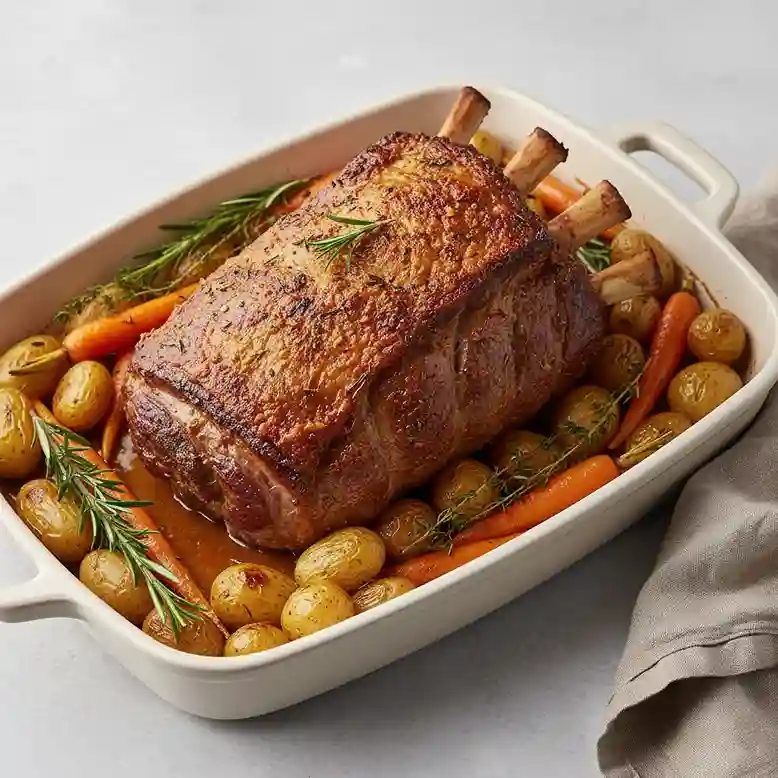
I love how the meat stays tender while the potatoes and carrots soak up every drop of flavor around it.
It’s the kind of meal that settles everyone into their seats and makes them quiet for a few seconds as they take the first bite.
I come back to this recipe again and again because it holds its own. No drama, no rush—just honest cooking that rewards anyone willing to give it time in the oven.
And every single time, that final slice reminds me why I keep making it.
Table of Contents
Standing Rib Roast Recipe
Ingredients
- 1 standing rib roast, about 4–5 pounds (room temperature before cooking)
- 2 teaspoons fine salt
- 1 teaspoon black pepper
- 2 teaspoons garlic powder
- 1 teaspoon onion powder
- 1 tablespoon fresh rosemary, chopped
- 1 tablespoon fresh thyme leaves
- 3 tablespoons olive oil
- 1 tablespoon Dijon mustard
- 1 pound baby potatoes
- 10–12 whole baby carrots or medium carrots cut into thick pieces
- 1 medium onion, quartered
- 4–5 garlic cloves, smashed
- 2–3 whole sprigs rosemary
- 2–3 whole sprigs thyme
Instructions
- Take the roast out of the refrigerator about 1–1.5 hours before cooking so it reaches room temperature. This helps it cook evenly and prevents a cold center.
- Preheat your oven to 475°F (245°C). Use the center rack so heat surrounds the meat properly.
- Pat the roast dry very well with paper towels. Dry meat browns better. Place it in a roasting dish with the ribs facing downward so the meat stands up.
- In a small bowl, mix salt, pepper, garlic powder, onion powder, chopped rosemary, chopped thyme, olive oil, and Dijon mustard. It should form a thick paste.
- Rub this paste all over the roast, covering every surface. Massage it in so it sticks well.
- Add the baby potatoes, carrots, onion pieces, and smashed garlic around the roast. Drizzle them lightly with a little extra olive oil and toss gently so they are coated. Place whole sprigs of rosemary and thyme between the vegetables.
- Put the roasting dish into the hot oven and roast at 475°F (245°C) for 15 minutes. This gives you the deep brown crust.
- After 15 minutes, reduce the oven temperature to 325°F (165°C) without opening the door. Continue roasting until the internal temperature reaches your preferred doneness. For medium, aim for 130–135°F (54–57°C). This usually takes about 1.5–2 hours depending on thickness.
- Check the temperature using a meat thermometer by inserting it into the thickest part, avoiding bone. This is the only way to get a perfect result every time.
- When the roast reaches the target temperature, remove the dish from the oven and loosely cover the meat with foil. Let it rest for 20–25 minutes. Resting allows the juices to settle so the slices stay moist.
- During resting, give the vegetables a gentle stir in the pan drippings so they absorb more flavor.
- Slice the roast between the bones or into thick slices and serve with the roasted vegetables and pan juices spooned over the top.
How Do You Choose The Best Standing Rib Roast?
Choosing the right cut makes a big difference in how tender and flavorful your roast turns out.
- Bone-In Cut: Bone-in meat cooks more evenly and stays juicy because the bones protect the roast from direct heat.
- Even Marbling: Look for tiny white lines of fat throughout the meat. These melt as it cooks and help keep the roast moist.
- Uniform Thickness: A roast with the same thickness all around cooks evenly and avoids dry edges.
- Bright, Fresh Color: Meat with a fresh red tone indicates quality and proper storage at the market.
A roast that checks these points gives you a stronger base for excellent flavor and texture.
How Do You Season A Standing Rib Roast For The Best Flavor?
Seasoning helps the meat form a crust and adds depth to the final taste.
- Salt Layer: Salt helps pull moisture to the surface, creating a natural crust as it roasts.
- Herbs And Garlic: Rosemary, thyme, garlic powder, and onion powder stick well to the surface and stand up to long cooking.
- Oil Coating: A light coating of olive oil helps the seasonings stay in place and encourages browning.
- Mustard Base: A thin smear of Dijon mustard holds herbs and spices tightly and gives a subtle tang without overpowering the meat.
A well-seasoned roast doesn’t need extra finishing sauces because the crust becomes naturally full of flavor.
Why Should The Roast Sit At Room Temperature Before Cooking?
Allowing the meat to warm slightly before roasting helps it cook evenly.
When a cold roast goes directly into the oven, the outside starts cooking immediately, but the inside stays cold for too long.
This causes uneven doneness and often leads to an overcooked exterior with a raw center.
Letting the roast rest on the counter for about an hour helps the heat move through the meat more smoothly once it hits the oven.
Why Is A High-Temperature Start Important For A Standing Rib Roast?
The high heat at the beginning is crucial for the crust.
- Crust Formation: The surface dries quickly and browns faster, giving you that deep golden color.
- Locked-In Juices: A quick sear helps develop a barrier that keeps moisture inside.
- Better Texture: The outside becomes slightly crisp while the inside stays tender.
After the initial high heat, lowering the temperature gives slow, steady cooking without burning.
How Do You Know When The Standing Rib Roast Is Fully Cooked?
Using a thermometer is the most reliable method. Insert it into the thickest part of the meat, making sure it doesn’t touch the bone. The temperature you choose depends on how pink you want the center.
A range of 130–135°F gives you a warm, rosy center. Remove the roast from the oven a few degrees earlier because the temperature keeps rising slightly while it rests.
Why Is Resting The Roast So Important?
Resting helps keep the meat juicy and tender. When the roast comes out of the oven, the juices inside are bubbling and moving. If you cut it right away, these juices pour out onto the board.
Resting allows the juices to settle back into the meat fibers. Cover it loosely with foil and give it at least 20 minutes before slicing.
How Do The Vegetables Cook Properly Under The Standing Rib Roast?
The vegetables absorb the drippings, giving them a richer taste.
- Close Placement: Keeping potatoes and carrots close to the meat helps them catch the drippings.
- Even Size: Cut the vegetables into uniform pieces so they finish cooking at the same time.
- Gentle Tossing: A light oil coat helps them brown instead of drying out.
- Herb Sprigs: Whole thyme and rosemary sprigs add aroma without overpowering the vegetables.
Cooking the vegetables in the same pan not only saves time but also builds deeper flavor.
How Do You Slice A Standing Rib Roast Properly?
Cutting the roast the right way helps keep each slice tender. Place the roast on a board and turn it so the bones face you. Slice alongside the bones to remove the entire roast in one piece.
Then cut the meat across the grain into thick slices. Cutting across the grain shortens the muscle fibers, making each bite softer.
How Do You Store Leftover Standing Rib Roast?
Proper storage keeps the leftover meat safe and tasty.
- Airtight Container: Store slices in a sealed container so the meat doesn’t dry out.
- Separate Vegetables: Keep vegetables in a separate smaller container to preserve their texture.
- Refrigeration: Refrigerate within two hours and use within three to four days.
- Freezing Option: You may freeze slices in airtight bags for up to two months.
Keeping everything sealed prevents odors from the fridge affecting the flavor.
How Do You Reheat Standing Rib Roast Without Drying It?
Low heat is the key to gentle reheating. Place the slices in a small baking dish and cover it to keep moisture in. Warm it in the oven at around 275°F until heated through.
You can also add a splash of broth to the dish to keep the meat soft. Avoid microwaving because it makes the meat tough and rubbery.
Can You Prepare A Standing Rib Roast Ahead Of Time?
You may prepare parts of it early to make cooking day easier. You can season the roast a few hours ahead and keep it loosely covered in the refrigerator. This gives the salt time to settle into the surface.
The vegetables can be washed, peeled, cut, and stored in a covered bowl. When ready to cook, remove the meat early so it warms slightly, then assemble everything in the pan.
You May Also Like To Check Out These Recipes
- Christmas Cake Pops
- Christmas Tree Cake Pops
- Christmas Cookie Cake
- Christmas Tree Cake Cheesecake
- Cranberry Christmas Cake
- Grinch Christmas Cake
- Red Velvet Cheesecake Cake
- Gingerbread Cake
- Pistachio And White Chocolate Winter Wonderland Cake
- Oreo Cheesecake Cupcakes
- Black Bottom Cupcakes
- Oreo Cupcakes
- Gingerbread Cupcakes
- Red Velvet Cupcakes
- Lemon Cupcakes
- Cranberry White Chocolate Cookies
- Santa Cookies
- Melted Snowman Cookies
- Cranberry Orange Cookies
- Linzer Cookies With Almond Flour
- Grinch Sugar Cookies
- Ooey Gooey Butter Cookies
- Cookies And Cream Cookies
- Raspberry Thumbprint Cookies
- Christmas Tree Rice Crispy Treats
- Starbucks Cranberry Bliss Bars
- Christmas Oreo Balls
- Cranberry Pecan Cheese Ball
- Mexican Champurrado
- Christmas Tree Pizza
- Christmas Chocolate Peppermint Bark
- Peanut Butter Rice Krispie Treats
- Sausage Hash Brown Casserole
- Christmas Cream Cheese Mints
- Beef Wellington
- Perfect Prime Rib
- Bubble Room White Christmas Cake Recipe
- Mouthwatering Roasted Leg Of Lamb With Potatoes And Carrots
- Delicious Lamb Chops In Air Fryer
- Zuni Roast Chicken With Bread Salad Recipe
- Lamb Loin Chops
- Meat Lasagna Recipe With Ricotta
- Broccoli Cheese Casserole
- Broccoli Bake
- Roast Beef Sliders Hawaiian Rolls
- Cheese Fondue Without Alcohol
- Christmas Tree Pull Apart Bread
- Keto Sausage Balls
- Chicken And Noodles
- Venison Italian Meatballs
- Hashbrown Casserole
- Southern-Style Vegan Collard Greens
- Baked Brie With Jam
- Festive Holiday Salad
- Grinch Fruit Kabobs
- Spinach Puffs
- Beef Bacon Wrapped Green Beans
- Christmas Cheese Ball
- Christmas Fudge
- Crock Pot Cranberry Meatballs
- Sugared Cranberries
- Authentic Cacio E Pepe Recipe
- Cheese Straws With Puff Pastry
- Best Mince And Cheese Pie Recipe
- Sweet And Sour Meatballs With Pineapple Chunks
- Honey Sriracha Meatballs
- Meatballs On A Stick
- Creamy Carbonara Recipe With Cream Of Mushroom
- Chicken Pot Pie
- Christmas Simmer Pot Recipe
- Eggnog Cheesecake
- Pecan Tassies
- Peanut Butter Blossom Cookies
- Christmas Snowman Veggie Tray
- Christmas Fruit Platter
- Christmas Puppy Chow Chex Mix
- Toasted Ravioli
- 3 Ingredients Grape Jelly Meatballs
- Vegan Spinach Artichoke Dip
- Green Beans Almondine
- Eye Of Round Roast
- Turkey Pinwheels
- Whipped Feta Dip
- Gluten Free Yorkshire Pudding
- Creamed Spinach
- Deviled Eggs
- Caramel Popcorn
- Christmas Brownies
- How To Make Ribeye Steak In The Oven